When to Upgrade Your Kettle
You don't need a gooseneck on day one. Here's when it starts to matter.
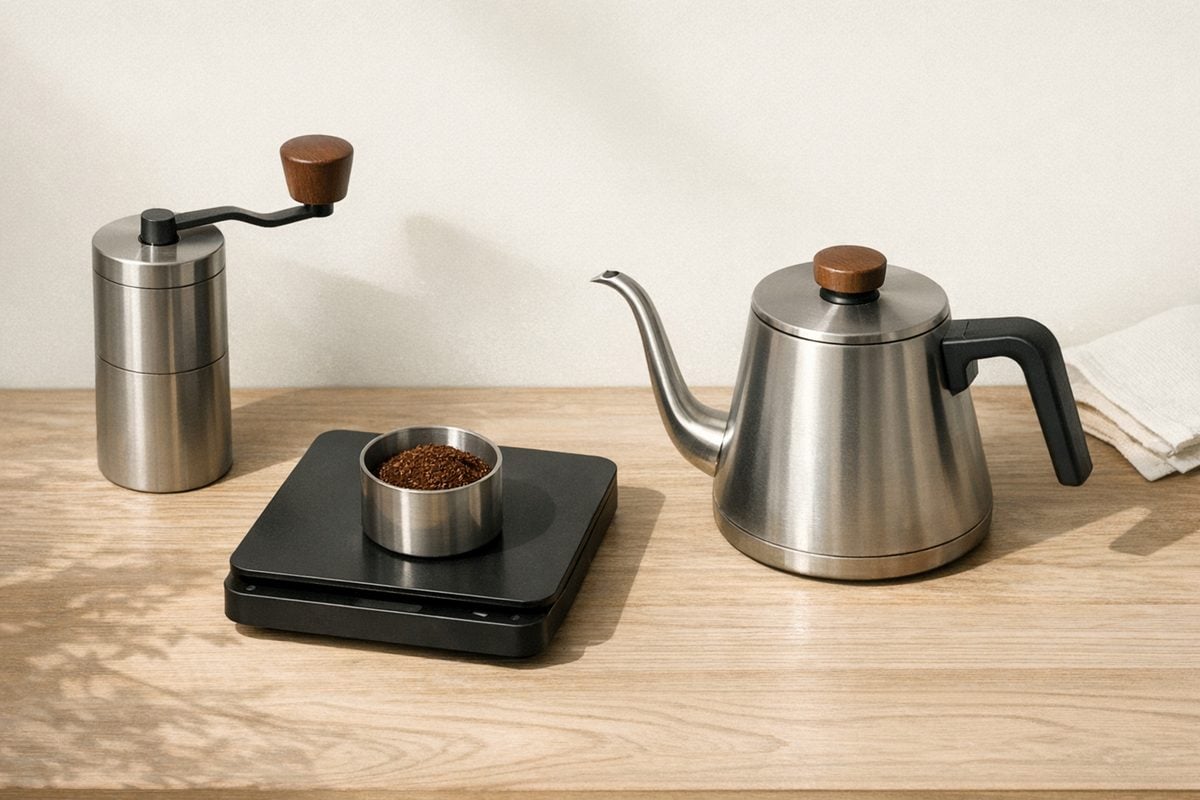
If you are wondering when to upgrade gooseneck kettle, the short answer is this: upgrade when your current kettle is limiting your pour, not when you are just collecting gear. A gooseneck matters once you care about consistency, control, and repeatable results in pour-over.
For many people, that point comes after the basics are already in place. Good coffee, a decent grinder, and a repeatable brew routine usually move the cup more than a new kettle on day one.
What actually changes with a gooseneck kettle
A gooseneck kettle gives you better control over flow rate and placement. That is the whole case for it.
With a standard kettle, water often comes out in a heavier stream. It is harder to start and stop cleanly. It is also easier to disturb the coffee bed, overfill one side of the brewer, or rush through your pours without meaning to.
With a gooseneck, you can:
- pour slower
- keep the stream steadier
- place water where you want it
- make smaller adjustments during bloom and main pours
- repeat the same pattern more easily
This works best in manual brewing methods where pouring is part of extraction. Think V60, Kalita Wave, Chemex, and similar brewers.
If your question is really, do I need a gooseneck, the honest answer is no. You can make good pour-over without one. But once your technique improves, a regular kettle can become the weak point.
Who it is for
A gooseneck upgrade makes sense for people who already brew pour-over regularly and notice that their kettle gets in the way.
That usually looks like one or more of these:
- your pours feel clumsy or inconsistent
- you struggle to keep a low, steady flow
- your drawdown times swing even when dose and grind stay the same
- you are trying to follow a brew recipe but cannot match the pour structure
- you want more clarity and balance from light or medium roasts
- you are brewing one cup at a time and care about repeatability
This is also where the question gooseneck kettle worth it becomes more practical. If you are already dialed in on grind, ratio, and water temperature, then yes, it often is worth it because it solves a real problem.
Not because it looks nice. Because it makes your pouring less random.
Who it is not for
If you are new to coffee, a gooseneck is usually not the first upgrade to make.
Day-one beginners can skip it. A better grinder will usually matter more. So will fresher coffee and a simple brew recipe you can repeat.
You can also skip the upgrade if:
- you mostly brew French press, AeroPress, or cold brew
- you do not enjoy manual pour-over in the first place
- your current kettle already gives you enough control for your routine
- you are still changing multiple variables at once and cannot tell what is affecting the cup
In those cases, buying a new kettle will not suddenly fix the brew. It may just add one more thing to think about.
Signs your current kettle is holding you back
This is the useful test. You should upgrade coffee kettle only when the current one creates friction you can clearly describe.
A few common signs:
You cannot pour slowly without pulsing
If the stream starts too hard, then weakens, then surges again, your extraction will be less even. A gooseneck helps smooth that out.
You keep disturbing the coffee bed
Heavy pours can dig channels or push grounds to the sides. That matters more once your technique gets more precise.
You are chasing recipes but cannot execute them
If a recipe calls for a 40-second bloom and two controlled pours, but your kettle dumps water too fast, the issue is not your recipe reading. It is your tool.
Your results are good, but not repeatable
A non-gooseneck kettle can still make a nice cup. The problem is often consistency from one brew to the next.
You have already upgraded the bigger variables
If you now have solid beans, a capable grinder, and a stable brew method, the kettle becomes easier to notice. At that stage, the upgrade often has a real payoff.
A practical pick
If you’re in the market for something that does the job without overbuying, this is one option we’d consider.
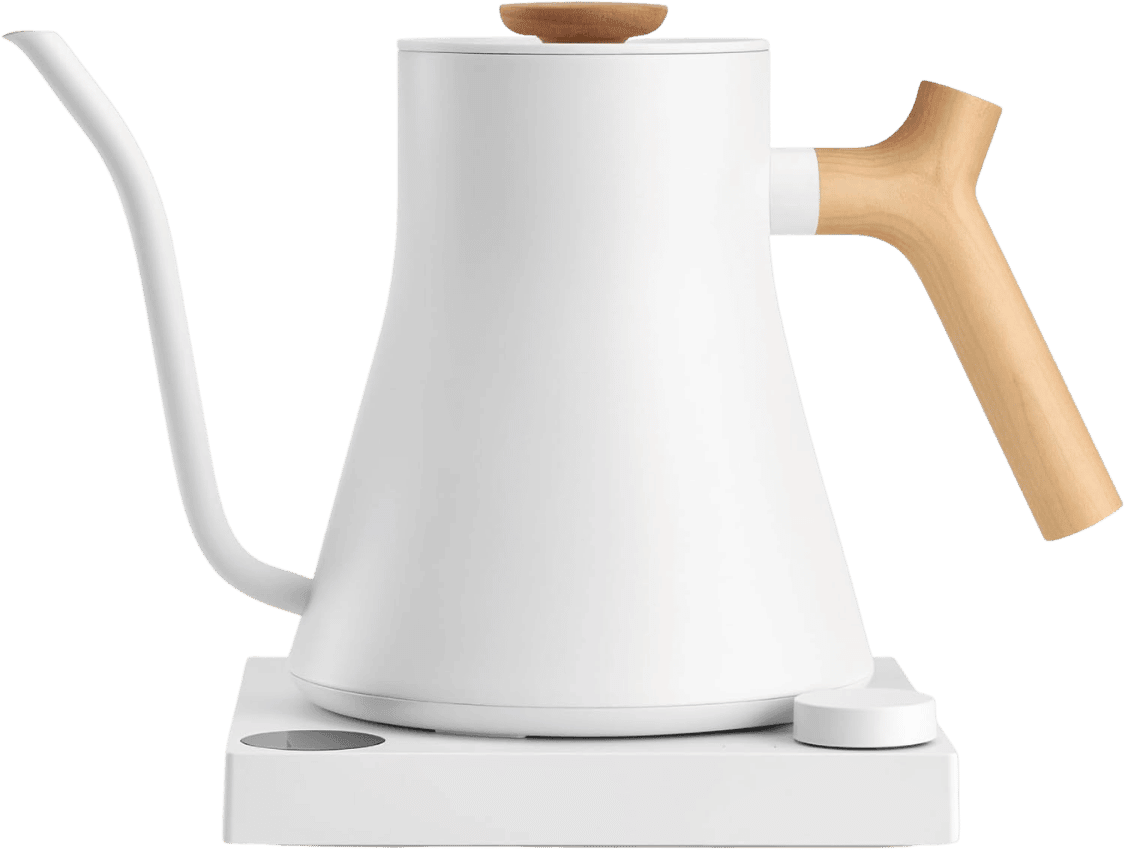
Fellow Stagg EKG Kettle
Gooseneck with temperature control and hold. A solid upgrade when you care about repeatable water temp and pour control.
When it makes sense
The right time to upgrade is usually when technique matters more than convenience.
That means:
- you brew pour-over often enough to build habits
- you can taste when a cup is over- or under-extracted
- you want tighter control over agitation and pour timing
- you are trying to make your brews repeatable, not just acceptable
If that sounds like you, the upgrade is reasonable.
If your brews are still all over the place because of grind inconsistency or stale coffee, wait. A gooseneck will not solve those problems.
Common mistake: upgrading too early
The most common mistake is treating a gooseneck like a requirement for serious coffee.
It is not.
People often ask do I need a gooseneck because pour-over culture makes it feel essential. In practice, it becomes useful only after you know what better control would help you do.
If you cannot yet tell whether your pours are too aggressive, too fast, or uneven, then you are unlikely to get full value from the upgrade. Learn the brew first. Then fix the bottleneck.
The bottom line
Upgrade when your kettle is limiting your ability to pour with control and consistency. Not before.
For regular pour-over brewers, a gooseneck is often worth it once the rest of the setup is solid and the goal is repeatable results. For beginners, it is easy to skip for now.
A kettle should support the brew, not lead it. Upgrade when that support starts to matter.