The Decent Travel Setup
Minimal gear for good coffee on the road — one opinion on what's worth packing.
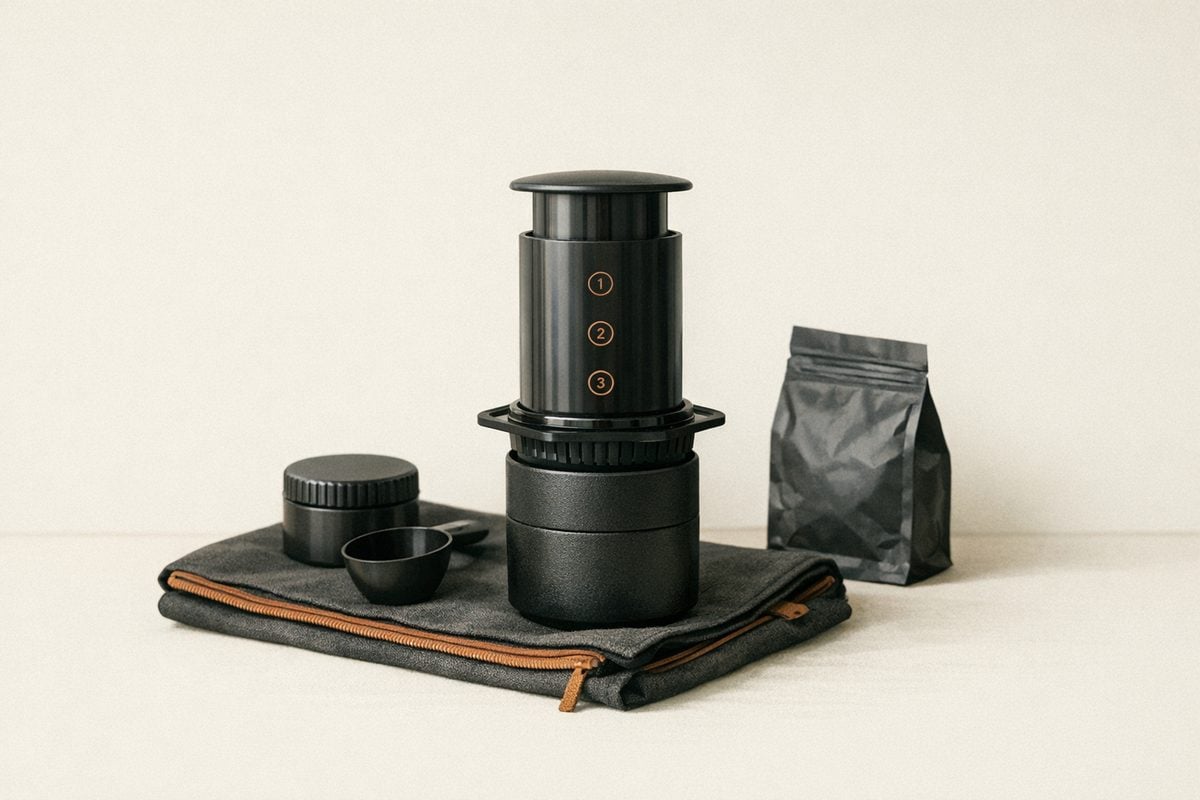
A good travel coffee setup should do one thing well. Make consistently decent coffee without turning your bag into a gear closet. The right setup is small, reliable, and easy to use when your counter space is a hotel desk or a campsite table.
This is not about bringing everything. It is about bringing enough.
What this setup is
A decent travel coffee setup is a minimal group of tools that covers the full brew process without excess. That usually means three parts. A brewer. A way to heat water or access hot water. A way to grind coffee, or a plan that removes the need to grind on the go.
The core idea is simple. Prioritize coffee quality, then cut everything else.
For most people, the shape of a practical travel coffee kit looks like this:
- One compact brewer
- One mug or vessel that can do double duty
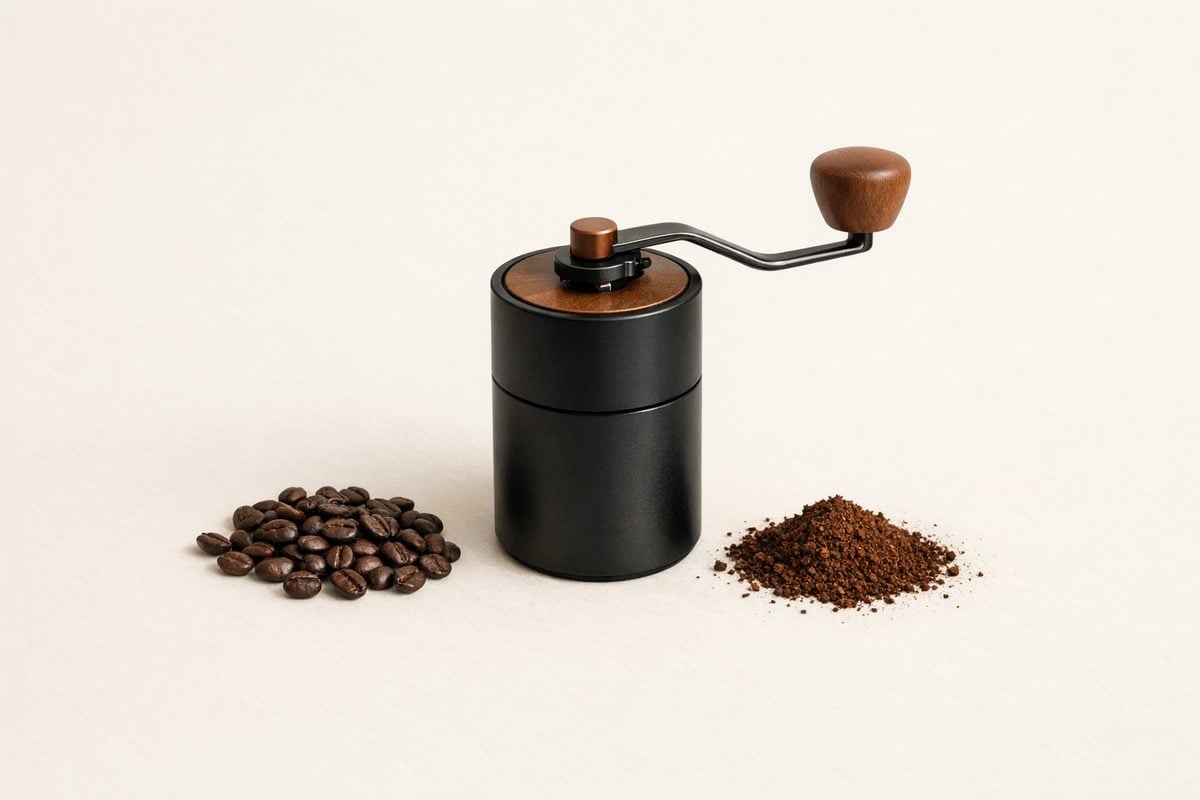
- A small grinder, or pre-ground coffee packed well
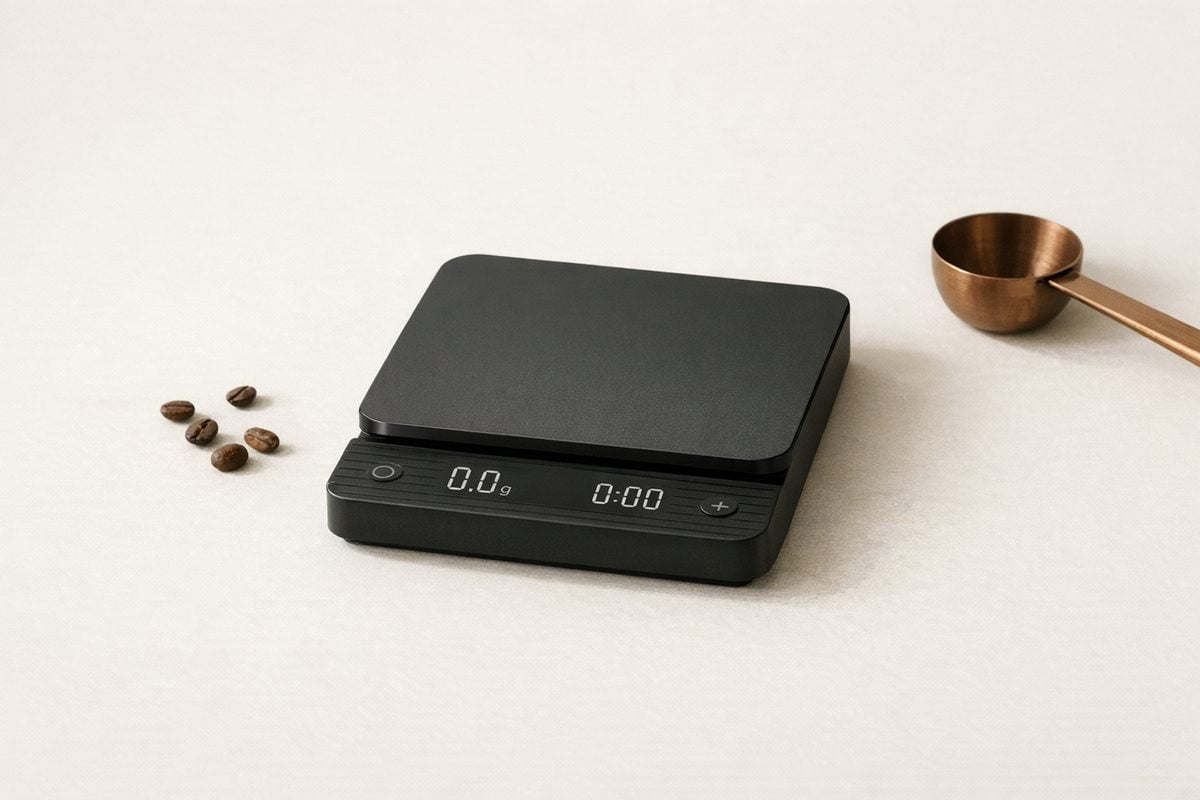
- A scale only if precision matters enough to justify the space
- Filters or parts that are easy to replace
- A storage method that keeps the kit contained
The common mistake is building a portable coffee gear collection instead of a system. A system is easier to pack, faster to set up, and much more likely to get used.
What makes a setup actually decent
A decent setup is not defined by how small it is. It is defined by tradeoffs handled well.
First, it should be forgiving. Travel introduces variables. Inconsistent kettles. Limited water control. Bad lighting. Uneven surfaces. A brewer that still works under those conditions matters more than a brewer that shines only in a perfect kitchen.
Second, it should pack cleanly. Loose parts become annoying fast. If filters bend, lids pop off, or the grinder sheds grounds into your bag, the setup stops feeling simple.
Third, it should be easy to repeat. Coffee on the road should not require mental effort before caffeine. If your method depends on exact pouring technique or multiple accessories, it is probably too fragile for travel.
That is why immersion and hybrid brewers tend to make more sense than delicate pour over setups for many travelers. An AeroPress-style approach, for example, fits the brief well because it is compact, forgiving, and capable of making genuinely good coffee. Not everyone needs that exact brewer, but the logic is sound.
Who it's for
This kind of travel coffee setup works for people who care about coffee, but not enough to haul a full barista station through airports.
It makes sense if you:
- Travel often for work
- Stay in hotels with unpredictable coffee options
- Spend time in cabins, road trips, or short rentals
- Want coffee on the road that is better than convenience-store backup
- Prefer a repeatable routine with minimal gear
It also works for people who value control over convenience, but still have limits. You want decent flavor. You do not want a separate bag for brewing equipment.
Who it's not for
This setup is not for everyone.
If you want café-level espresso while traveling, minimal gear will feel like compromise. That is a different goal, and it usually means more equipment, more weight, and more friction.
It is also not ideal if you only take one or two trips a year and are happy drinking whatever is available. In that case, a dedicated travel coffee setup may solve a problem you do not really have.
And if part of the enjoyment is using a full ritual with multiple brewing tools, travel may not be the place to force minimalism. The stripped-down version can feel unsatisfying if the process itself is the point.
A practical pick
If you’re in the market for something that does the job without overbuying, this is one option worth considering.
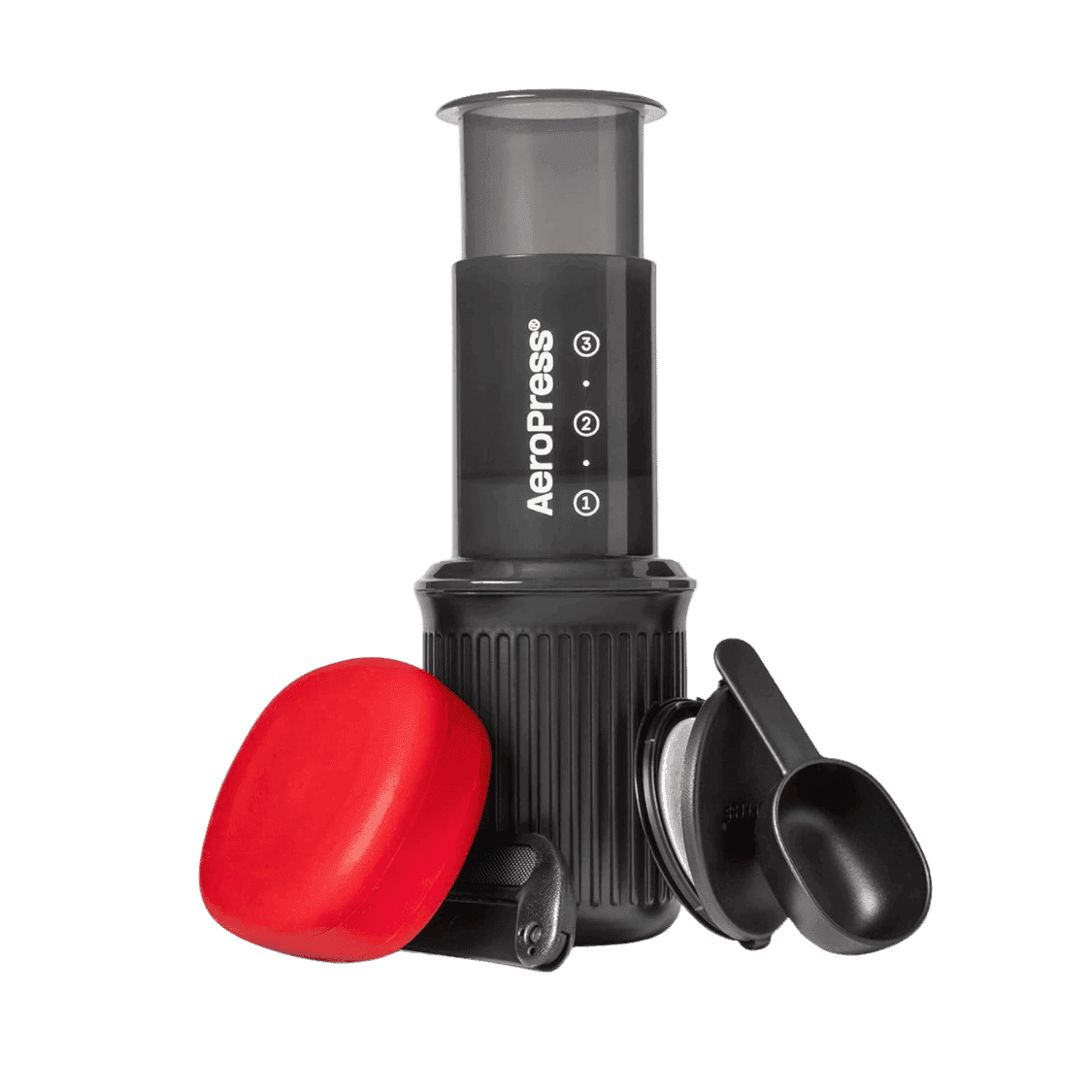
AeroPress Go
Compact AeroPress with its own mug and lid. The same method as the original, sized for travel.
Common mistakes
The first mistake is overpacking. People often add backup options for imagined scenarios. Two brewers. Extra cups. A full-size bag of beans. Multiple filter types. This adds bulk without improving the result.
The second mistake is choosing gear that is technically portable but practically awkward. Small is not enough. If it is fragile, annoying to clean, or dependent on accessories that are easy to lose, it is not good travel gear.
The third mistake is assuming you need to bring every variable under control. In real travel conditions, water and heat are often the weak points. Chasing perfect precision with scales, gooseneck kettles, and exact recipes can make the setup feel fussy. For most people, good enough control with a forgiving brewer produces better real-world outcomes.
The fourth mistake is ignoring coffee storage. Fresh beans matter, but so does convenience. If your beans are packed in a way that creates mess or stales quickly after opening, the whole setup degrades by day two or three.
What tends to work
A strong travel setup usually has one anchor piece. A brewer that is compact, durable, and not too technique-sensitive. Around that, everything else should justify its place.
Manual grinders can make sense if coffee quality is the main priority and you have room. Pre-ground coffee can also make sense for short trips, especially if the goal is simplicity. This is where many people get stuck in theory. In practice, fresh-enough pre-ground coffee for a weekend trip is often a better choice than dragging a mediocre grinder you dislike using.
The same logic applies to scales and kettles. If they meaningfully improve your results and fit your travel style, bring them. If they make the setup feel heavy or slow, leave them behind. A travel coffee kit should reduce friction, not introduce new forms of it.
The best version is usually the one you can set up in under five minutes and pack away just as quickly.
Alternatives
There are a few valid alternatives to a dedicated travel coffee setup.
One is to rely on local cafés and accept the variation. This works well in cities with strong coffee culture. It works poorly in transit-heavy travel or remote destinations.
Another is to bring only coffee and use whatever brewer is available. This is lighter, but less dependable. Hotel drip machines and rental apartment gear can be fine, or unusable. You are giving up control.
A third option is instant specialty coffee. It is not the same experience, but it solves nearly every travel problem at once. For some trips, especially very short or very mobile ones, that tradeoff is sensible.
The bottom line
A decent travel coffee setup is about restraint. Bring one method that works, supports good coffee, and fits the realities of travel. Skip the fantasy version where every brew variable is controlled.
If the setup is simple enough to use anywhere, it will probably make better coffee more often. That is the point.
Good coffee while traveling does not require a full setup. It requires a clear one. Choose gear that earns its place, keep the system tight, and let consistency matter more than completeness.