Why Water Temperature Matters (And When It Doesn't)
When to worry about water temp and when to just use water off the boil.
Coffee water temperature affects extraction, which means it changes what ends up in the cup. But it does not deserve the level of obsession it sometimes gets. In most home setups, being close matters more than being exact.
A few degrees can shift sweetness, bitterness, and clarity. Still, there are many cases where off-the-boil water is completely fine. The useful question is not what number is perfect. It is when water temperature matters enough to change what you should do.
What coffee water temperature actually does
Hotter water extracts coffee faster. Cooler water extracts it more slowly. That simple change affects flavor.
When water is too cool, coffee can taste thin, sour, or underdeveloped. When it is too hot, it can pull more bitterness, dryness, and harsher roast notes. That is the basic tradeoff.
The reason this gets overcomplicated is that temperature does not work alone. Grind size, brew time, roast level, dose, and brewer all interact with it. If one variable changes, the ideal temperature can shift too.
That is why coffee water temperature matters, but not always in the same way. It is one lever among several. Important, yes. Sacred, no.
When water temperature matters
Temperature matters most when the coffee, brewer, or method gives you less margin for error.
Light roasts
Light roasts are denser and usually harder to extract. They often benefit from hotter water, sometimes even just-off-boil or straight off the boil depending on the brew method. If your light roast tastes sharp or hollow, higher temperature is one of the first things to check.
Pour over and other clean brews
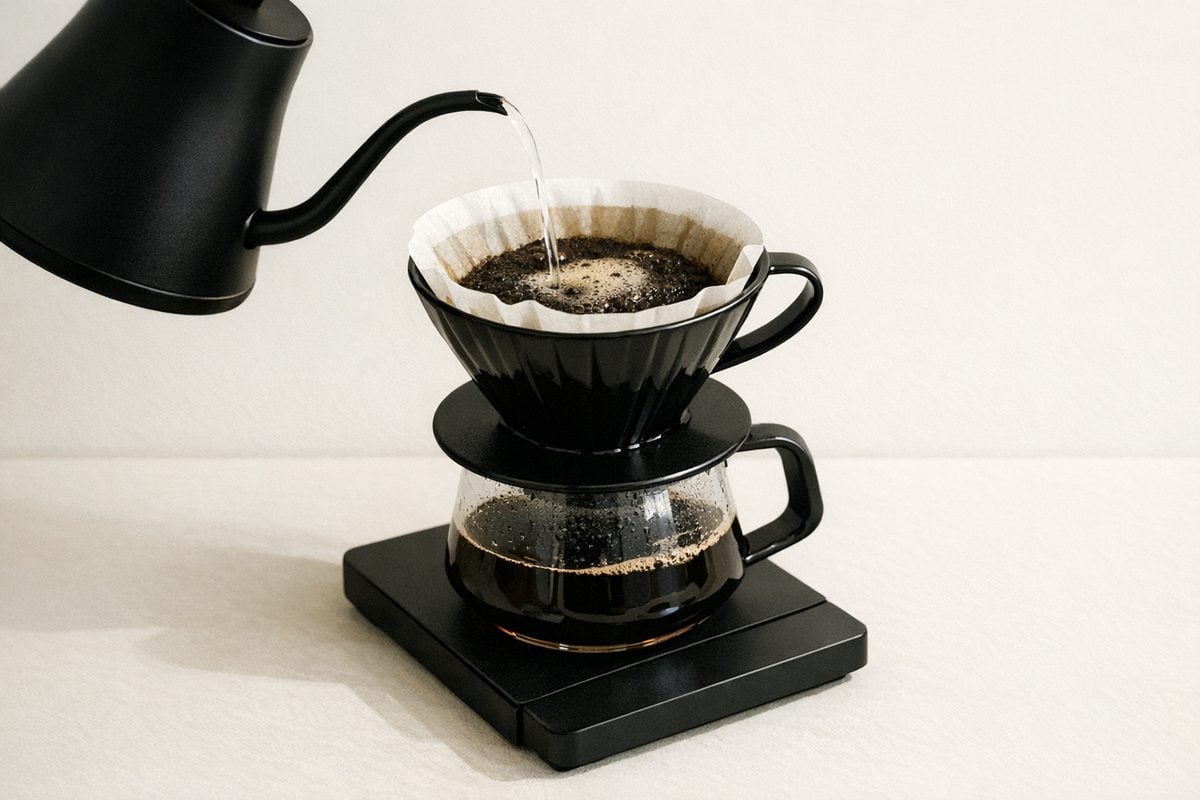
Water temp for pour over matters because these methods reveal small changes clearly. Paper-filtered brews tend to show more clarity and separation, which means temperature shifts are easier to taste. If you are brewing a delicate washed coffee and want more sweetness or more structure, adjusting temperature can help.
Short brews and fine tuning
In methods where extraction happens quickly or where you are trying to dial in a narrow flavor target, a few degrees can matter. This is especially true when everything else is already fairly consistent.
Brewing with very fresh coffee
Fresh coffee can be harder to extract evenly. Hotter water can help open it up, especially if the cup seems tight or muted.
When it matters less
There are also many situations where exact numbers add little.
Medium to dark roasts
Darker roasts extract more easily. They often taste better with slightly cooler water, but they are also more forgiving. If you are brewing a medium-dark coffee and using water a little below boiling, you are usually in a reasonable range already.
Immersion methods
French press, cupping, and many steep-based methods are more forgiving than people think. Because the coffee and water stay in contact together, small temperature differences often matter less than grind and steep time. Boiling water for coffee in a French press is not automatically a mistake, especially with lighter roasts.
Everyday brewing where consistency is modest
If your kettle has no temperature control, your grinder is basic, or your pouring is not especially repeatable, chasing exact temperature may not improve much. In that case, using roughly the same approach each time matters more than hitting 93°C on the dot.
Who it's for
This matters most if you are trying to improve a cup that already feels close. If your coffee is almost right but a little sour, flat, or bitter, temperature is a useful adjustment.
It is also worth paying attention if you brew lighter roasts, use pour over regularly, or like cleaner, more transparent cups. These contexts make temperature changes easier to notice and more worth controlling.
Who it's not for
If you are still sorting out basic brew ratios, grind size, or stale coffee, water temperature is probably not the first problem. It can help, but it usually will not rescue a poorly set up brew.
It is also not the highest-priority variable for people who want coffee to be simple and repeatable without extra tools. You do not need thermometer worship to make good coffee at home.
A practical range that works
For most brewed coffee, a range around 90 to 96°C works well. That is broad on purpose.
Use the hotter end for lighter roasts, smaller brewers, and cups that taste under-extracted. Use the cooler end for darker roasts or cups that taste bitter and dry.
If you do not have a thermometer, this is still manageable:
- For light roasts, water right off the boil is often fine.
- For medium roasts, a short wait after boiling usually works.
- For darker roasts, let the water sit a bit longer before pouring.
That gets you close enough to make sensible adjustments without turning brewing into lab work.
A practical pick
One piece of gear that fits this topic well:
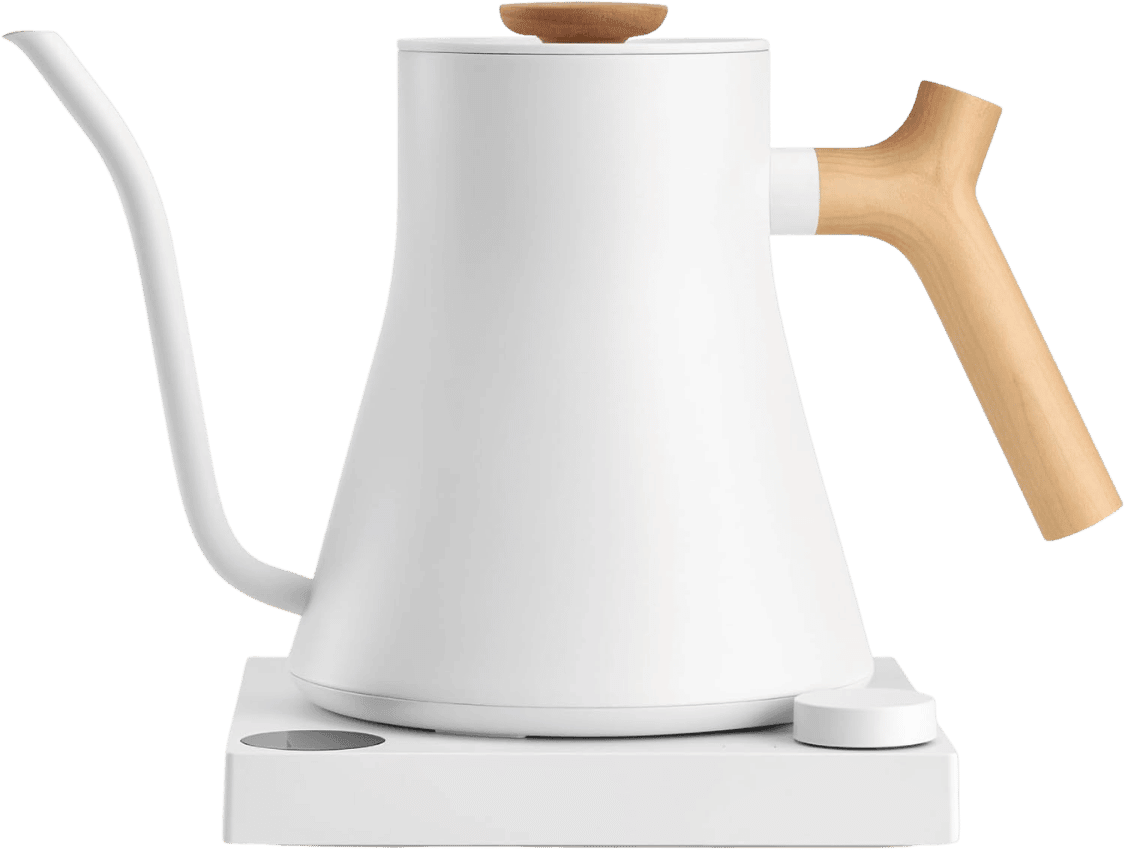
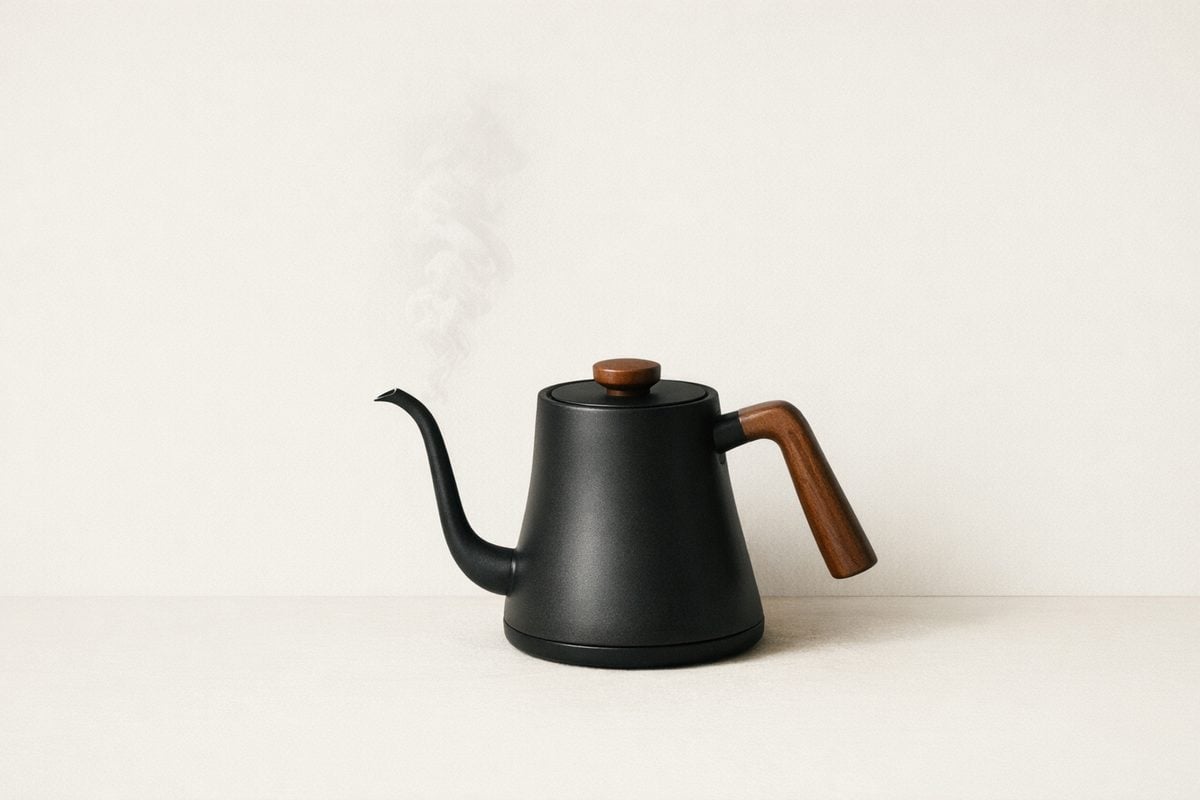
Fellow Stagg EKG Kettle
Gooseneck with temperature control and hold. A solid upgrade when you care about repeatable water temp and pour control.
Common mistakes
Treating temperature as the main fix for everything
If the grind is far off, changing temperature will not solve much. The same goes for poor ratios or low-quality water. Fix the larger issues first.
Assuming boiling water is always bad
Boiling water for coffee is often blamed too quickly. In many brewers, the water cools as soon as it leaves the kettle, hits the brewer, and contacts the coffee bed. With light roasts, off-the-boil water can be exactly the right move.
Chasing precision without consistency
A precise kettle does not help much if your dose, grind, and pouring vary widely. Consistency beats precision when you have to choose one.
Ignoring roast level
This is one of the most useful shortcuts. Lighter coffee generally wants more heat. Darker coffee often wants less.
The bottom line
Coffee water temperature matters when you are working with light roasts, pour over, or cups that need small extraction changes. It matters less when the brew method is forgiving, the roast is darker, or the rest of the process is still inconsistent.
A good default is simple: start close to boiling for lighter coffees, back off a little for darker ones, and only get more precise if the cup gives you a reason to. That is usually enough.