One Pour-Over Recipe That Works Every Time
A single, repeatable recipe for pour-over so you can stop second-guessing.
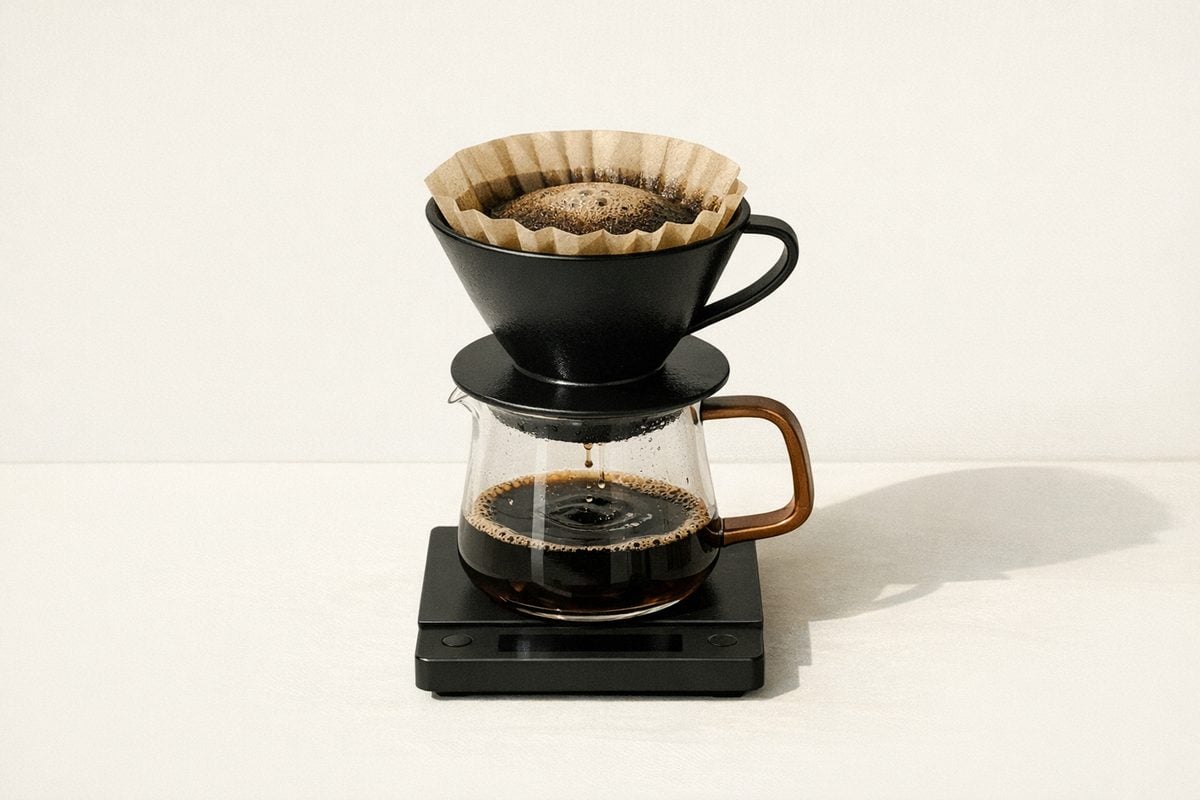
If you want a pour over recipe you can use without rethinking every step, this is the one. It keeps the variables tight so you can build a repeatable pour over instead of chasing small changes every morning.
The goal is not novelty. The goal is a cup that is clean, balanced, and easy to reproduce.
What it is
This is a simple pour over method built around one ratio, one grind range, and one pouring pattern.
Use this:
- Coffee: 20 grams
- Water: 320 grams
- Ratio: 1:16
- Water temperature: 94 to 96°C
- Grind: medium, like table salt
- Total brew time: 2:45 to 3:15
Process:
- Rinse the filter well and preheat the brewer.
- Add 20 grams of coffee.
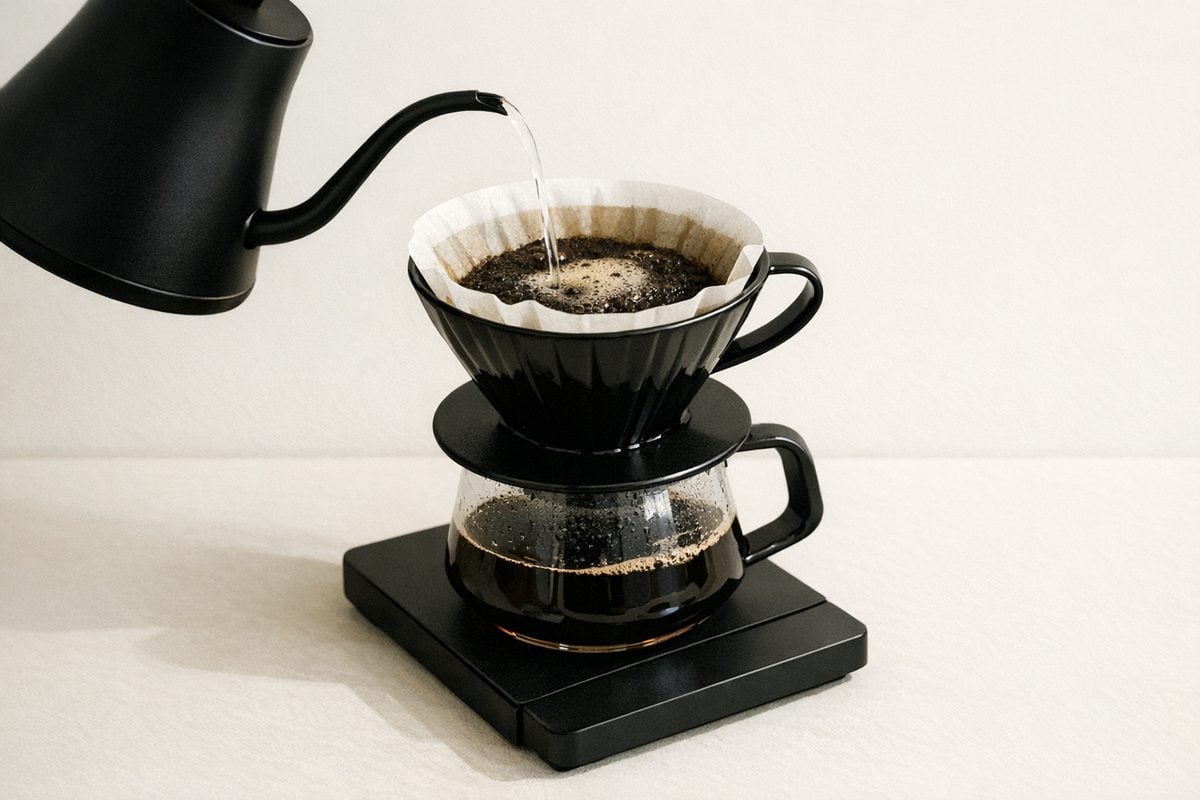
- Start the timer and pour 40 grams of water for the bloom.
- Wait until 0:45.
- Pour steadily to 200 grams by 1:30.
- Pour again to 320 grams by 2:00.
- Let it drain. Aim to finish by 3:15.
That is the full recipe. No pulse maze. No constant adjustment. No need to memorize five versions of the same V60 recipe.
A few notes matter:
- Keep the kettle close to the bed.
- Pour in small, steady circles.
- Try not to hit the filter too much.
- Give the brewer a gentle swirl after the final pour if the bed looks uneven.
This works because it limits decision fatigue. You are not solving coffee from scratch each day. You are repeating a stable process.
Why this pour over recipe works
Most people do not need more variables. They need fewer.
A reliable pour over comes from consistency in three places:
- Dose and ratio
- Grind size
- Pour structure
The 1:16 ratio is a good middle ground. It gives enough strength for clarity, but usually avoids the thinness that can show up at longer ratios. For many coffees, especially washed or balanced blends, it lands in a useful range without much effort.
The two main pours after the bloom also help. They create enough agitation to extract evenly, but not so much that the brew becomes muddy or stalls.
This is also forgiving. If your pour is slightly faster or slower, the recipe still tends to hold together. That matters more than a highly tuned method that only works when every movement is perfect.
Who it's for
This recipe is for people who already make pour over, but keep second-guessing it.
It makes sense if you often ask:
- Should I use 1:15 or 1:17
- Should I do three pours or five
- Is my bloom too long
- Is my brew time the problem, or the grind
It is also a good fit if you want one starting point for different coffees. Not because every coffee tastes the same with it, but because you can actually compare results when the method stays fixed.
If you use a cone dripper, this works especially well. As a V60 recipe, it is simple enough for daily use and structured enough to repeat with confidence.
Who it's not for
This is not for someone who enjoys changing every variable on purpose.
If you like exploring different ratios, heavy agitation, low-temperature brews, or very specific recipes for each origin, this may feel too narrow. That is fine. There is nothing wrong with experimentation.
It is also not ideal if you want the strongest possible cup from a pour over. A 1:16 ratio is balanced, not dense. If you prefer a heavier cup, you may want to move to 1:15 later.
And if your grinder is inconsistent, this recipe will help, but only up to a point. Some problems are not recipe problems.
A practical pick
One piece of gear that fits this topic well:
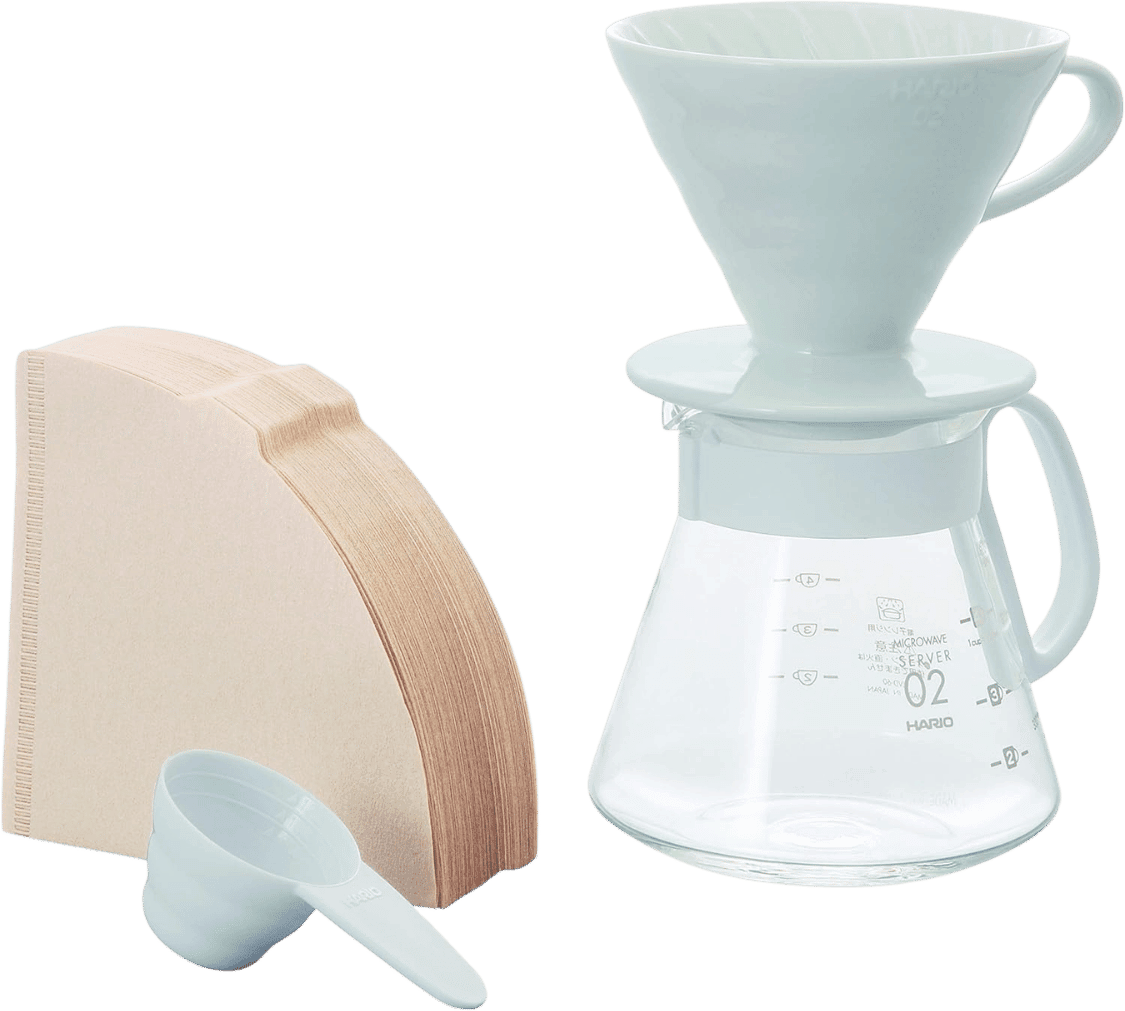
Hario V60 Pour-Over Set
The classic pour-over cone with ridges and a single hole. Simple, consistent, and easy to clean. A standard for a reason.
Common mistakes
A solid recipe still fails if the basics drift. These are the mistakes that matter most.
Grinding too fine
If the brew runs past 3:30 and tastes bitter, dry, or hollow, grind coarser.
Many people respond to weak coffee by grinding finer. Sometimes that works. Often it just makes the cup harsh and slows the drawdown.
Pouring too aggressively
A hard stream can dig into the bed and push fines into the filter. That often leads to uneven extraction and slower flow.
Keep the pour calm. Lower kettle height helps.
Changing multiple things at once
If the cup tastes off, adjust one variable only.
Good order of operations:
- Fix your dose and water.
- Keep the same pouring pattern.
- Adjust grind size first.
- Only then consider changing ratio.
That is how a repeatable pour over gets built. Not through constant reinvention.
Obsessing over exact seconds
Time matters, but it is not the first thing to chase.
If you hit roughly the same pour structure and your total time lands near the target, taste should guide the next change. A brew at 2:50 is not automatically better than one at 3:10.
How to adjust it without breaking it
A good recipe should leave room for small corrections.
If the cup tastes:
- Sour, sharp, or underdeveloped: grind a little finer
- Bitter, dry, or heavy: grind a little coarser
- Too weak: try 20 grams coffee to 300 grams water
- Too strong: try 20 grams coffee to 340 grams water
Keep the process the same while you test changes.
That matters more than people think. If you change grind, ratio, and pouring style together, you learn nothing. If you keep one simple pour over method and make one small adjustment, the result becomes useful.
The bottom line
Use one ratio. Use one pour pattern. Keep it steady long enough to learn from it.
This recipe works because it removes noise. It gives you a dependable baseline for daily brewing, and that is what most people actually need.
Start here. Stay with it for a week. If you adjust anything, adjust one thing at a time. Consistency is usually closer than it looks.