French Press Without the Sediment
A small change to your French press routine that cuts down on grit in the cup.
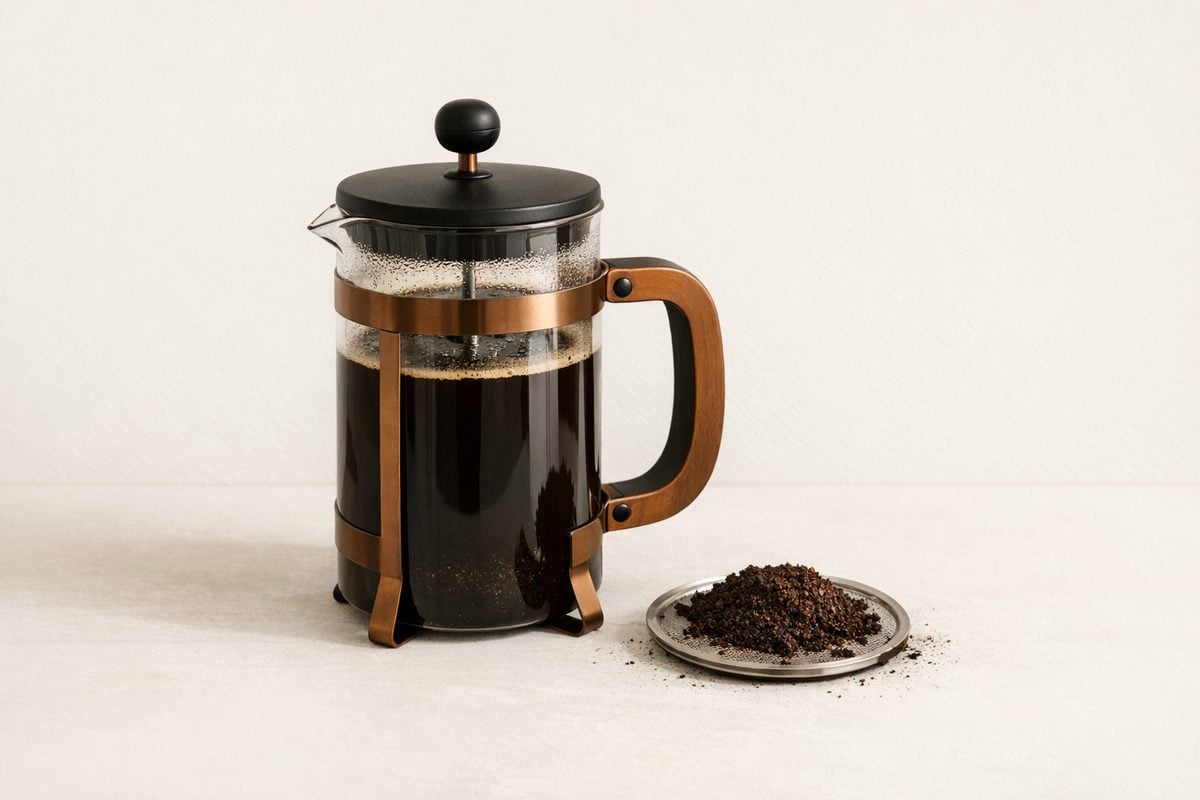
French press without sediment is possible, or at least close enough to change how the cup feels. You do not need a different brewer. One small process change does most of the work: pour gently and stop early.
What changes the cup
French press sediment comes from two places. Fine particles make it through the metal filter. Then the act of plunging and pouring stirs those fines back into the liquid.
The useful tweak is simple. Brew as usual, let the grounds settle, plunge slowly, then pour with restraint. Do not empty the carafe. Leave the last bit behind.
That final ounce or two holds a disproportionate amount of grit. The cup stays fuller in texture than paper-filter coffee, but cleaner than the usual French press finish. This is the easiest way to reduce French press grit without changing the character of immersion brewing.
How to do it
A clean french press cup starts with a normal recipe and a quieter finish.
Use this sequence:
- Grind a little coarser than drip, but not so coarse that extraction falls flat.
- Add coffee and water.
- Let it brew for about 4 minutes.
- Break the crust if you like, then give it another minute or two to settle.
- Plunge slowly. Do not force it.
- Pour gently.
- Stop before the last cloudy layer leaves the carafe.
The key is not the plunge itself. It is the decision to leave the bottom portion behind.
If you normally serve every drop, this can feel wasteful at first. In practice, the tradeoff is small. You lose a little volume and gain a much cleaner finish.
Why this works
French press is full-immersion brewing. That is part of why it tastes broad, heavy, and satisfying. It is also why fines stay in the drink more than they do with paper filtration.
When the brew sits for a minute or two after steeping, more particles fall to the bottom. When you pour gently, you disturb less of that settled layer. When you stop early, you avoid the densest pocket of sediment altogether.
This is not a trick to make French press taste like pour over. It keeps the body and oils that people usually want from a press. It just cuts the muddy tail end.
Who it’s for
This works for people who enjoy French press flavor but dislike the sludge in the final sips.
It makes sense if you want:
- more body than paper-filter coffee
- less grit at the bottom of the cup
- a french press method less sediment, without adding steps that change the brew too much
- a practical fix that works with the brewer you already have
It is especially useful when brewing for one or two cups, where leaving a small amount behind does not feel like a major loss.
Who it’s not for
This is not for people who want zero particles in the cup. French press uses a metal mesh filter. Some fines will always get through.
It is also not ideal if every milliliter matters to you. If you want to pour out the entire brewer every time, sediment will follow.
And if you already dislike the heavy texture of French press, this tweak will not change that. It cleans up the finish. It does not turn immersion coffee into filtered coffee.
A practical pick
One piece of gear that fits this topic well:
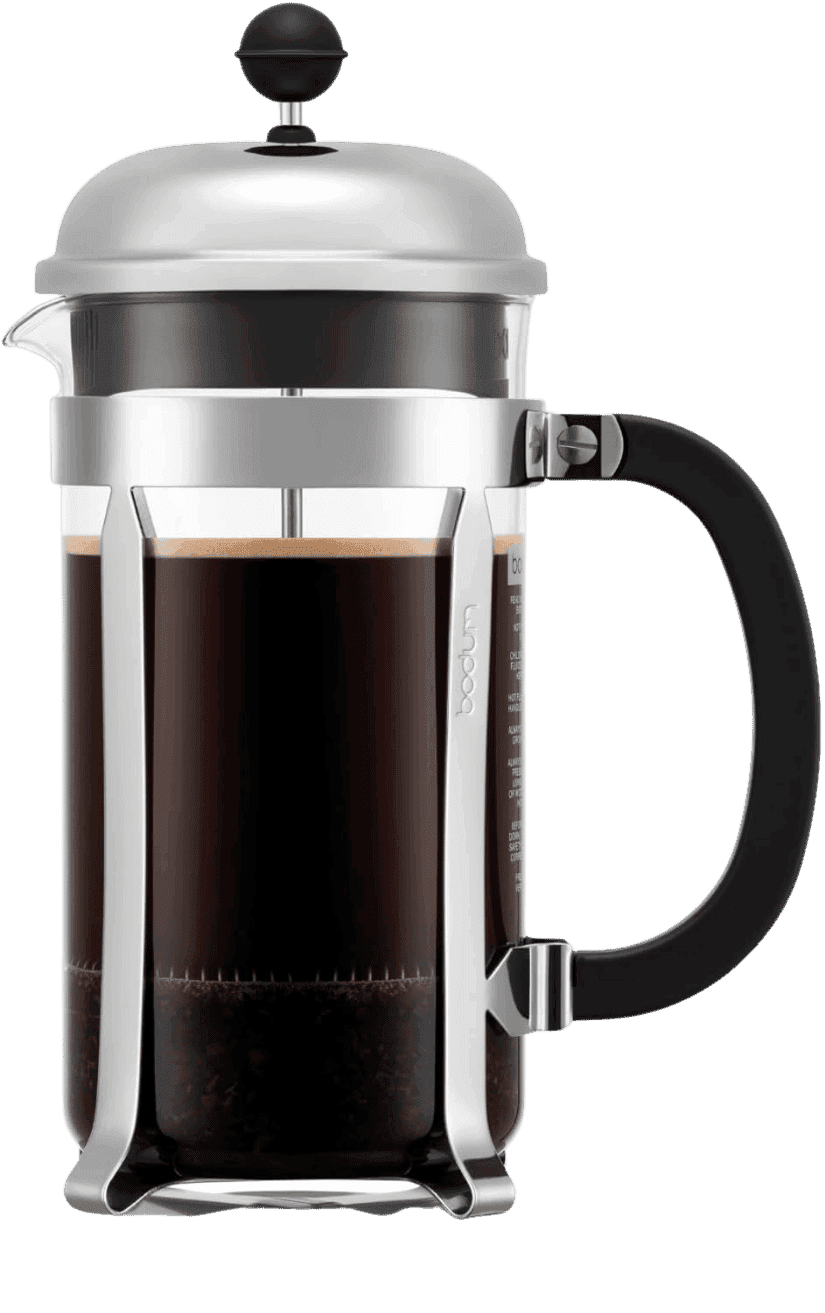
Bodum French Press
A straightforward immersion brewer. Glass body, steel frame, and a mesh plunger that does the job without fuss.
Common mistakes
A few habits undo the benefit.
Pouring too aggressively
A fast, hard pour lifts the settled fines back into suspension. Tilt slowly and keep the stream steady.
Pressing too fast
A rushed plunge creates turbulence. Go slow. The filter is there to separate, not to churn.
Grinding too fine
Finer coffee means more particles slipping through the mesh. If your cup is persistently muddy, move one step coarser.
Serving the last drops
This is the big one. The bottom of the carafe is where the sediment concentrates. If you want french press without sediment, that last portion is the part to sacrifice.
The bottom line
If you want a cleaner French press, do not chase a new brewer first. Let the coffee settle, pour gently, and leave the last bit in the press. It is a small change, but it removes much of the grit while keeping the body that makes French press worth using.
French press will never be perfectly sediment-free. But it can be clean enough that the final sip no longer feels like a compromise.