Setting Up a Simple Home Coffee Corner
Minimal setup so everything has a place and the routine stays calm.
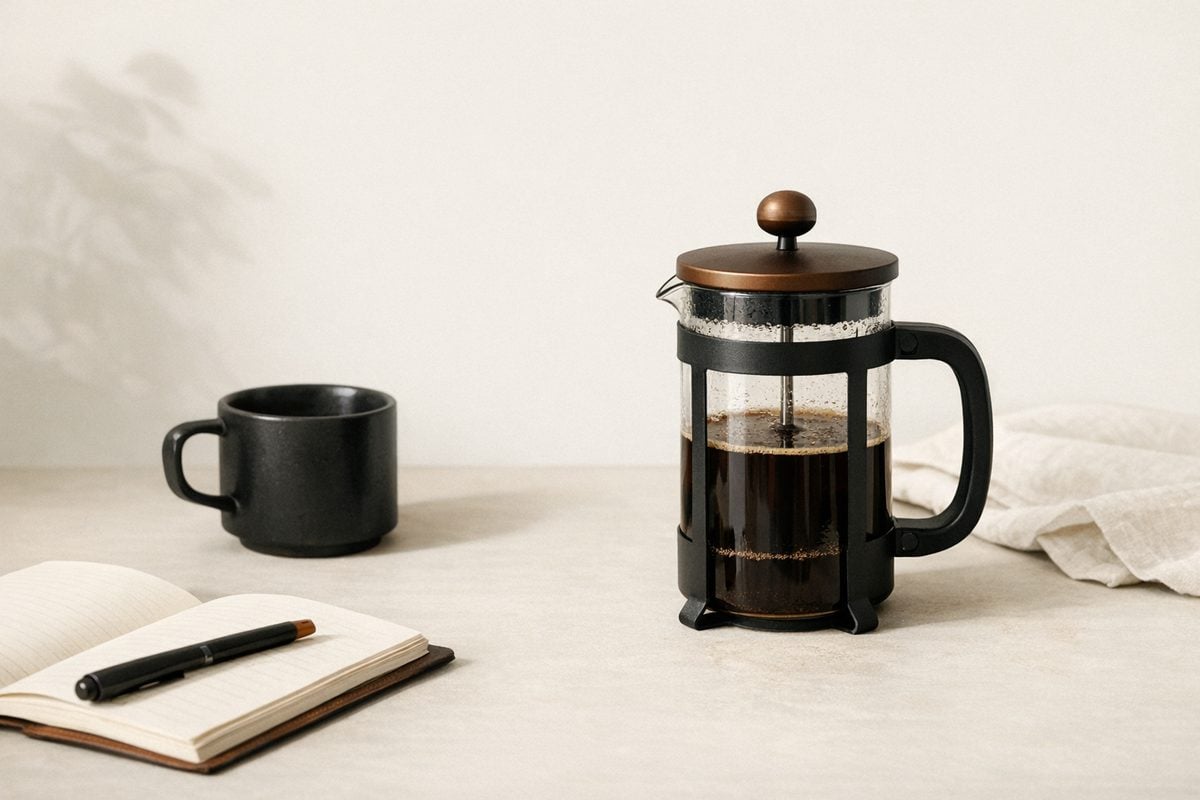
A simple home coffee station setup is less about decoration and more about friction. When your grinder, brewer, filters, and mugs all have a clear place, the routine gets quieter and faster. That is the point of a good coffee corner at home.
You do not need custom shelves or a full kitchen remodel. You need a small zone, a few boundaries, and a layout that matches how you actually make coffee.
What a simple home coffee station setup is
A home coffee station setup is one dedicated area for your daily coffee routine. It can be a section of countertop, a cart, a sideboard, or one shelf and one drawer. The goal is simple: keep your coffee tools together and keep the rest of the kitchen out of it.
A good setup usually includes:
- One brewing surface
- One storage area for daily-use gear
- Easy access to water, mugs, and waste disposal
- Enough open space to work without moving other kitchen items first
This is not about fitting every coffee tool you own into one display. It is about deciding what belongs in the station and what does not.
Why minimal organization matters
Most clutter comes from undecided items. Extra scoops. Old filters. Two grinders when only one gets used. Beans stored in three places. The visual noise makes the routine feel heavier than it is.
Minimal organization solves that in a practical way:
- Daily tools stay visible and reachable
- Occasional tools move out of the main zone
- Surfaces stay mostly clear
- Cleaning gets easier
- Brewing takes fewer steps
If you want to organize coffee gear well, the first step is not buying containers. It is reducing what needs to live on the counter.
Start with the routine, not the furniture
Before you arrange anything, map the sequence.
A typical flow looks like this:
- Get beans
- Weigh or dose
- Grind
- Brew
- Pour and drink
- Discard grounds
- Rinse and reset
Your setup should support that order. If the scale is in one cabinet, filters in another, and mugs across the room, the station is not really a station.
A calm layout puts the most-used items within one reach of the brewing area. Less-used items can sit nearby but not in the way.
What to keep in the station
For most people, the station should only hold daily essentials.
Keep these in the main zone:
- Brewer
- Grinder
- Beans
- Filters or brewing papers
- Scale, if used daily
- Kettle, if part of your regular method
- Two to four mugs
- Small towel or cloth
- Waste cup or knock box, if needed
Move these out of the main zone:
- Backup beans
- Rarely used brewers
- Spare parts
- Cleaning supplies you do not use daily
- Extra mugs
- Novelty accessories
This is where many setups go wrong. A station becomes storage for all coffee-related objects. That creates clutter, not convenience.
How to choose the right spot
The best place for a coffee corner at home is not always the prettiest one. It is the one that makes the routine easy.
Look for a spot with:
- Stable surface space
- Nearby outlet, if you use electric gear
- Reasonable access to water
- Enough height for pouring and grinding
- Low competition from other kitchen tasks
If the space is used for food prep all day, your station may need to be more compact. If you have a sideboard or cart nearby, that often works better than fighting for main counter space.
A small dedicated area usually works better than a larger shared area.
A simple layout that works
For a minimal coffee setup, divide the station into three zones:
Brew zone
This is the main working area. Keep it open. Only the brewer, scale, and kettle should live here while making coffee.
Storage zone
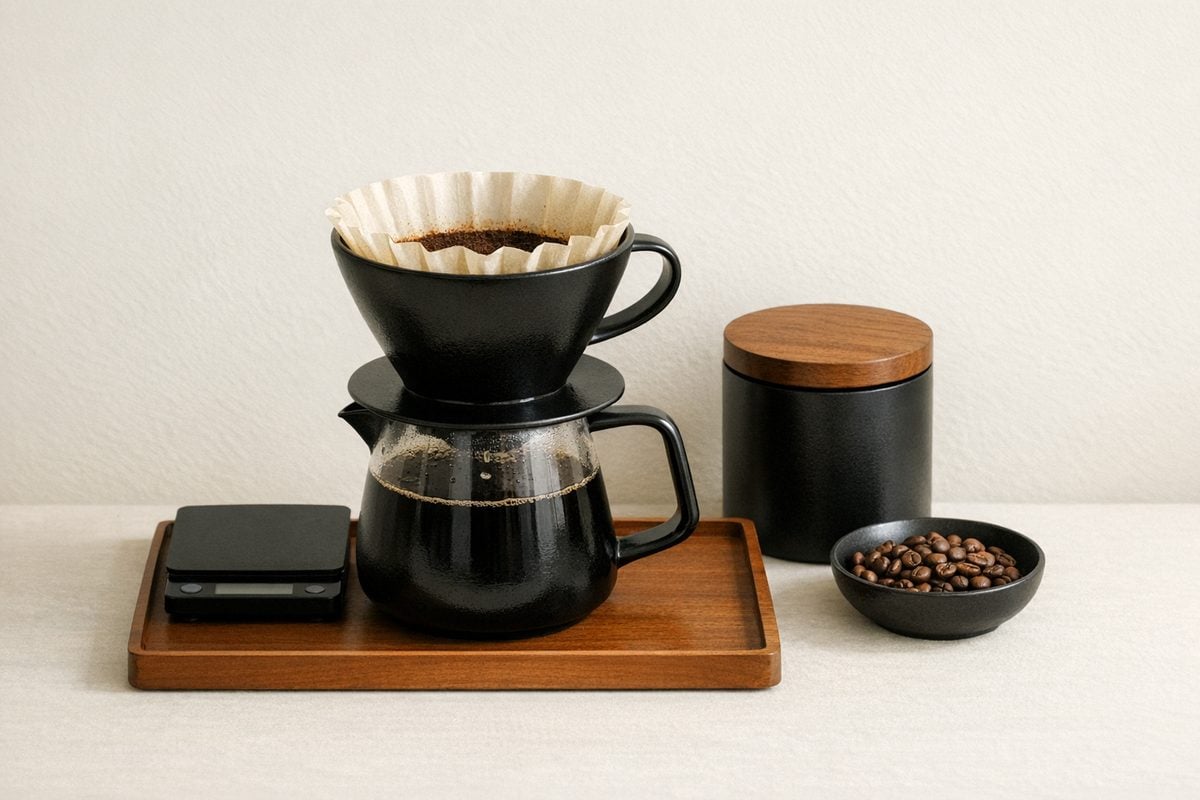
This holds beans, filters, grinder, and a small number of mugs. Use one tray, one drawer, or one shelf so the station reads as one unit.
Reset zone
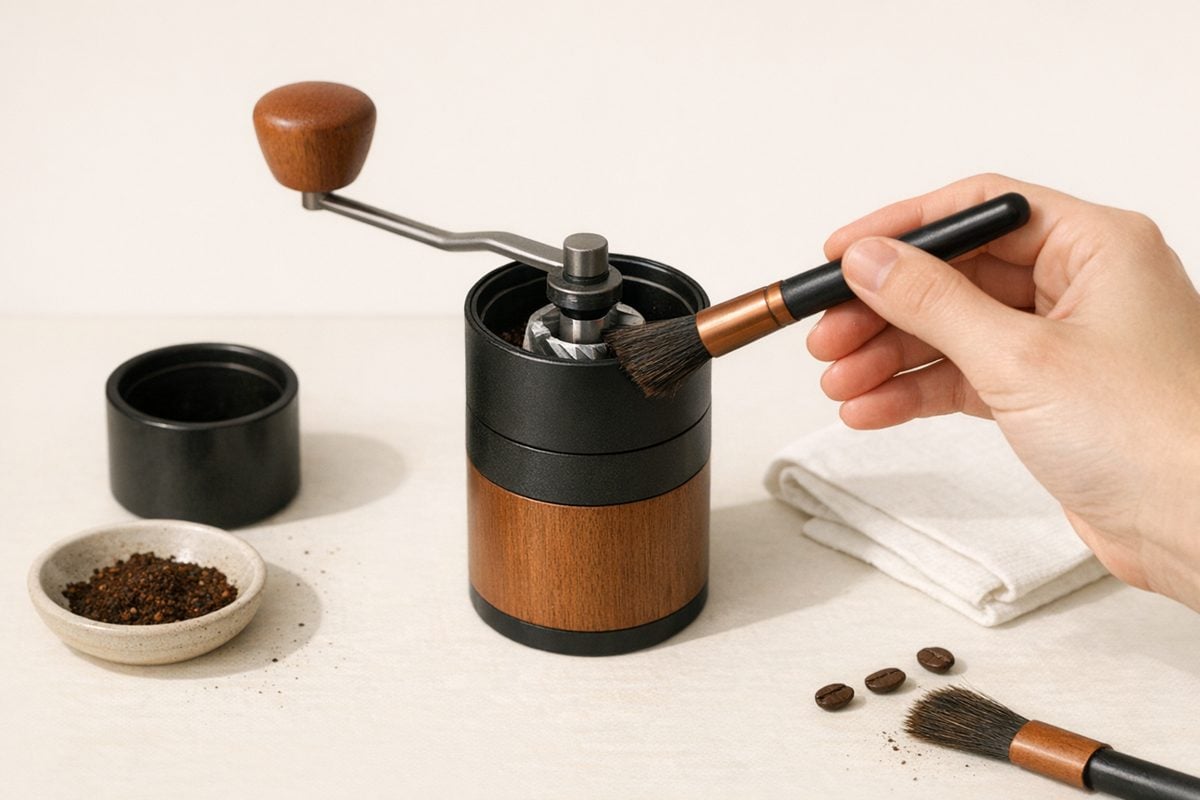
This is where cleanup happens. A cloth, brush, or waste container should be close enough that resetting the space takes less than a minute.
That last part matters. If cleanup is awkward, clutter starts to stay.
Containers help, but only after editing
Bins, jars, trays, and risers can help, but they are not the fix on their own. Good organization starts after you decide what stays.
Useful options include:
- A tray to visually contain the station
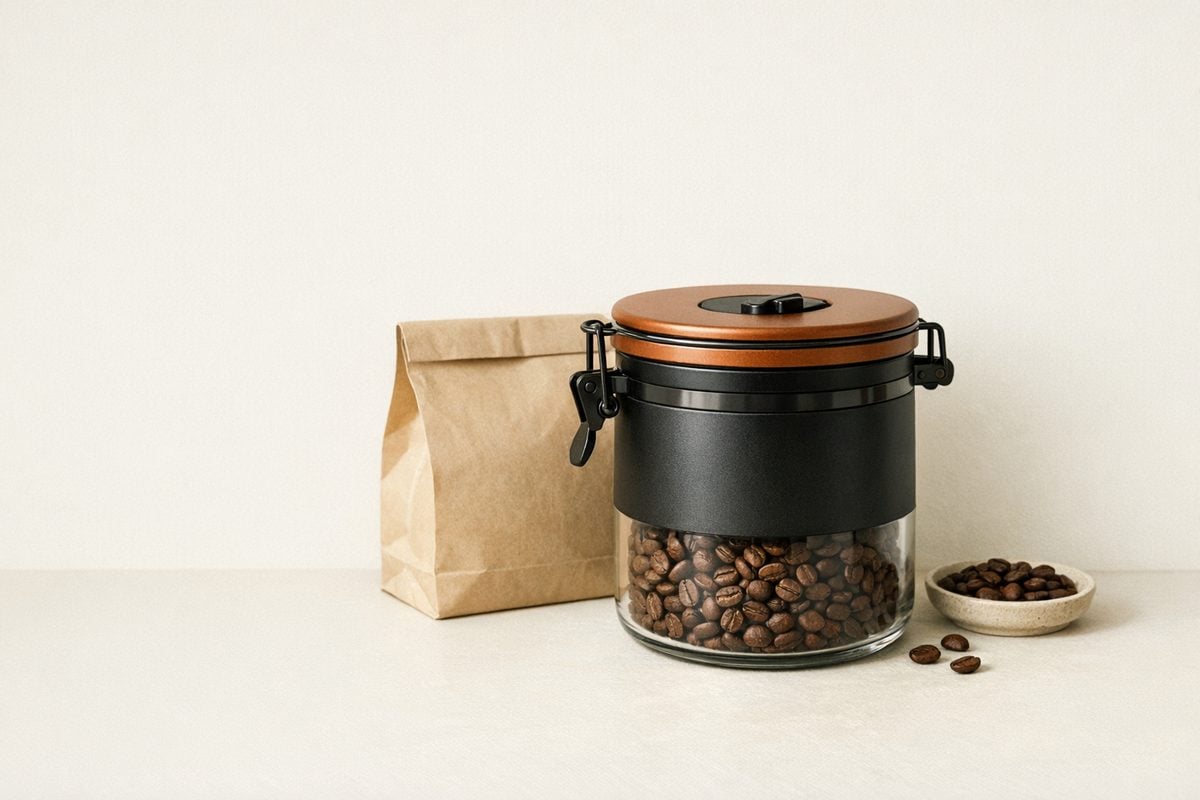
- One canister for current beans
- One small bin or drawer insert for filters and tools
- A mug rail or shelf if cabinet space is limited
Avoid overcomplicating it. If every item has its own micro-system, the setup becomes harder to maintain.
The cleanest stations usually rely on a few simple boundaries, not many accessories.
Who this is for
This approach works well if:
- You have accumulated coffee gear over time
- Your current setup spills across the kitchen
- You want a calmer morning routine
- You value function over display
- You want a minimal coffee setup without renovating
It is especially useful for small kitchens. A compact, deliberate station often feels better than storing coffee items in five separate places.
Who it’s not for
This may not be the right approach if:
- You enjoy rotating many brew methods every day
- You want a collector-style display of all your gear
- You have a dedicated bar or large utility space already
- You do not mind pulling items out each morning
A minimal setup asks for limits. If you want every option visible at all times, the station will naturally be larger and more complex.
A practical pick
One piece of gear that fits this topic well:
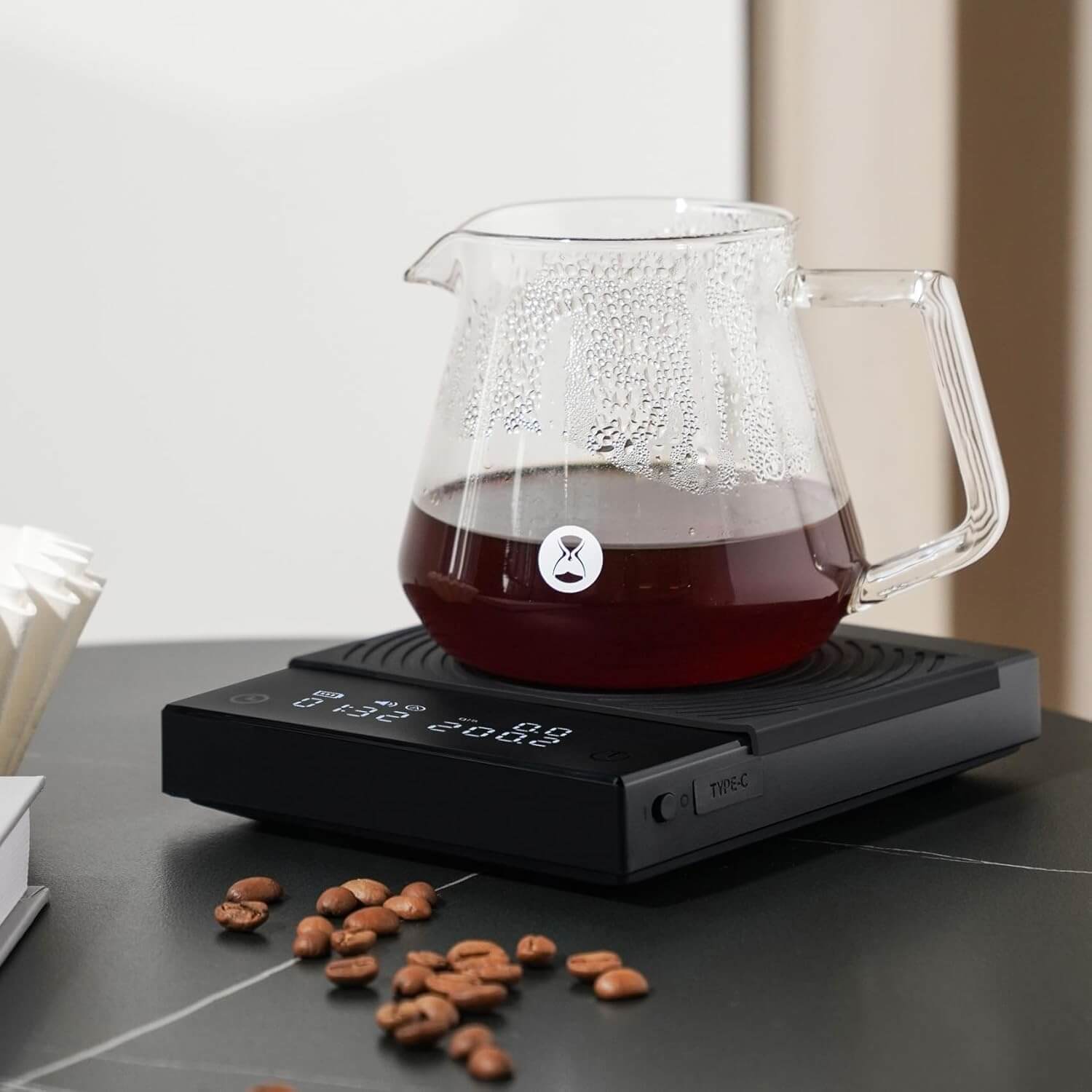
Timemore Black Mirror Scale
A compact scale with timer and 0.1g resolution that fits under most pour-over setups. Reliable for daily use.
Common mistakes
Treating the station like a showroom
A coffee station is a workspace first. If the setup looks clean but makes brewing slower, it is not working.
Keeping too much on the counter
Backup stock, extra cups, and occasional brewers should not live in the main zone. Counter space is part of the toolset.
Ignoring cleanup
If there is no easy place for grounds, drips, or a quick wipe-down, mess accumulates fast.
Organizing before editing
Buying storage without deciding what stays usually just hides clutter more neatly.
Copying someone else’s layout
Your station should match your routine, your kitchen, and your brew method. A setup for espresso has different needs than one for pour-over or batch brew.
When this kind of setup makes sense
A simple home coffee station setup makes sense when you want less visual noise and fewer decisions in the morning. It is a practical way to organize coffee gear without turning the kitchen into a project.
The key is restraint. Keep daily tools close. Store the rest elsewhere. Leave enough empty space to work comfortably.
A calm coffee corner at home does not need much. Just a clear place for what you use, and a reason for everything else to be somewhere else.