One Scale That Does the Job
What to look for in a coffee scale so you're not buying twice.
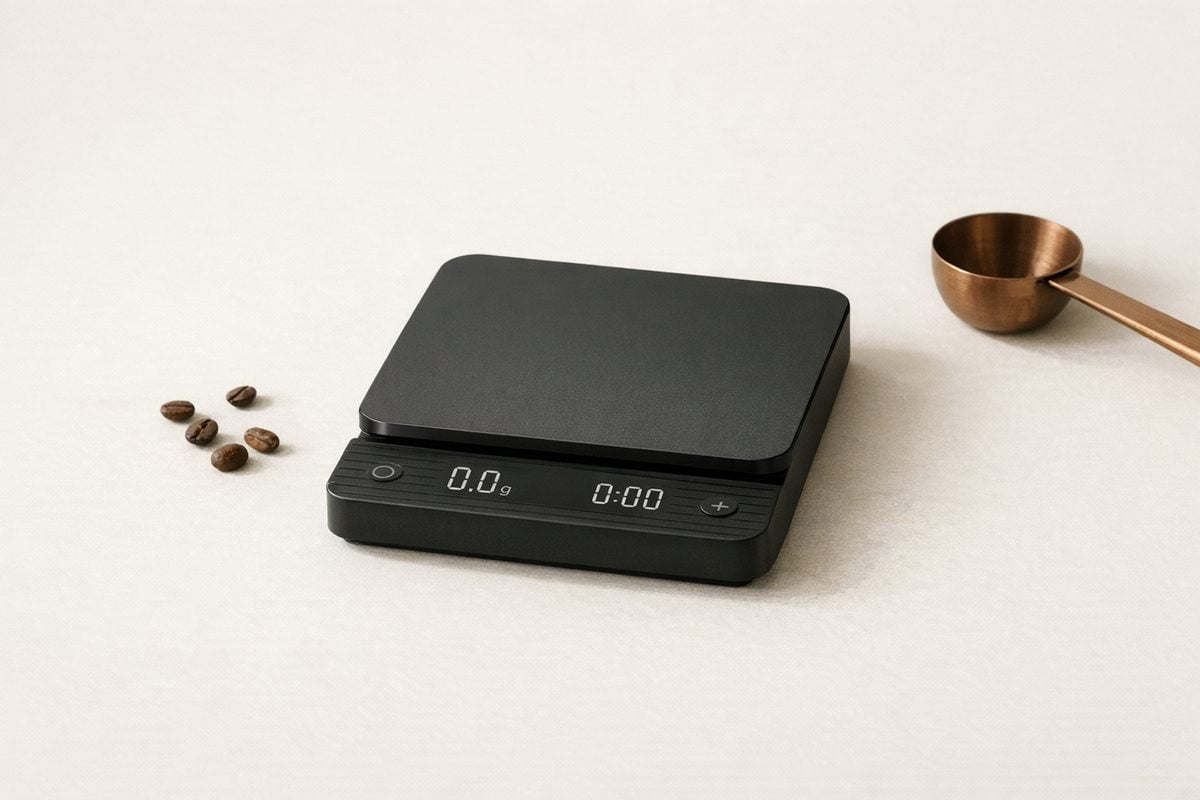
If you are looking for the best coffee scale, the goal is not more features. It is the right features. For most people, a good coffee scale comes down to three things: clear resolution, enough capacity, and durability that holds up over time.
This is one of those tools where buying once makes sense. A scale should disappear into the process and quietly do its job.
What actually matters in a coffee scale
A coffee scale measures two things that shape your brew: coffee dose and water weight. That sounds simple, but not every scale is built for brewing.
The first thing that matters is resolution. For coffee, that usually means measurements in 0.1 gram increments. This gives you enough precision for dialing in espresso and enough consistency for pour over, AeroPress, and most other brew methods. A scale that only reads in whole grams is usually too blunt for repeatable brewing.
The second thing is capacity. A brewing scale should handle more than just the dry coffee. It needs to support the brewer, vessel, and water together without maxing out. For manual brewing, a low-capacity scale becomes frustrating fast. A useful range for most people is enough headroom for a dripper, server, and full brew without stress.
The third thing is durability. Coffee scales live around heat, water, and daily handling. Buttons wear out. Plastic feet loosen. Displays fade. A scale does not need to be luxurious, but it should feel stable on the counter and survive normal kitchen use.
Everything else is secondary.
Timers are helpful. Auto modes can be helpful. Rechargeable batteries are convenient. But none of those matter much if the scale is slow, inaccurate, or flimsy.
Coffee scale what to look for
If you are trying to narrow the field, start here.
0.1 gram resolution This is the baseline. It is especially important for espresso, where small changes in dose matter. It is also useful for filter coffee because it helps keep recipes consistent.
Enough capacity for full brews Think beyond the coffee beans. A kitchen scale for coffee needs room for your full setup. If you brew into a carafe or server, capacity matters more than many buyers expect.
Fast response time This is easy to overlook. A scale can be technically accurate and still feel bad to use if the display lags. During pour over, delayed readings make it harder to hit your target smoothly.
Readable display Bright kitchens, steam, and early mornings are not ideal conditions. A clear display with large numbers is better than clever design.
Stable platform A small, shaky scale is annoying. A stable base helps with accuracy and makes pouring feel more controlled.
Water resistance Not mandatory, but useful. Brewing involves spills. Some protection goes a long way.
Simple controls This works better than feature overload. You want tare, timer if needed, and consistent operation. That is enough for most people.
Who it's for
A good brewing scale is for anyone who wants repeatable coffee without adding complexity.
It makes sense if you brew pour over, AeroPress, French press, or espresso and want your results to be easier to repeat. It also makes sense if you are tired of vague scoops and inconsistent cups. Weighing coffee and water removes guesswork quickly.
It is especially useful for people who want one scale that can handle multiple brew methods. If you move between espresso and manual brewing, resolution and capacity both matter. That is where many cheap scales fall short. They are either precise but too small, or roomy but not precise enough.
It also suits buyers who want to avoid replacing gear every year. A durable scale is not exciting, but it is one of the few pieces of coffee gear that earns its place every day.
Who it's not for
Not everyone needs a dedicated coffee scale.
If you only make occasional immersion brews and do not care about repeatability, a basic kitchen scale for coffee may be enough. As long as it is reasonably accurate and not painfully slow, it can cover simple use.
If your budget is very tight, it is better to buy a plain, accurate scale than a flashy coffee-branded one with weak fundamentals. A timer and sleek design do not fix poor performance.
And if you want a scale mainly for general cooking, baking, and large ingredients, a coffee-specific model may not be the best fit. Some are too small for broad kitchen use.
Common mistakes when buying a scale
The most common mistake is buying for features instead of function.
A long spec sheet can distract from the basics. App connectivity, brew guides, and smart modes sound useful, but they are often unnecessary. The scale still has to measure quickly, consistently, and clearly.
Another mistake is ignoring capacity. People often focus on dry dose accuracy and forget the total weight of the brewer and water. That leads to a scale that works for beans but struggles during actual brewing.
Another one is treating all 0.1 gram scales as equal. They are not. Build quality, sensor stability, and responsiveness vary a lot. Two scales can list the same precision and feel completely different in use.
Finally, do not overlook size. A scale can be accurate and still be awkward if your brewer barely fits on it or the display gets blocked by a carafe.
A practical pick
If you’re in the market for something that does the job without overbuying, this is one option worth considering.
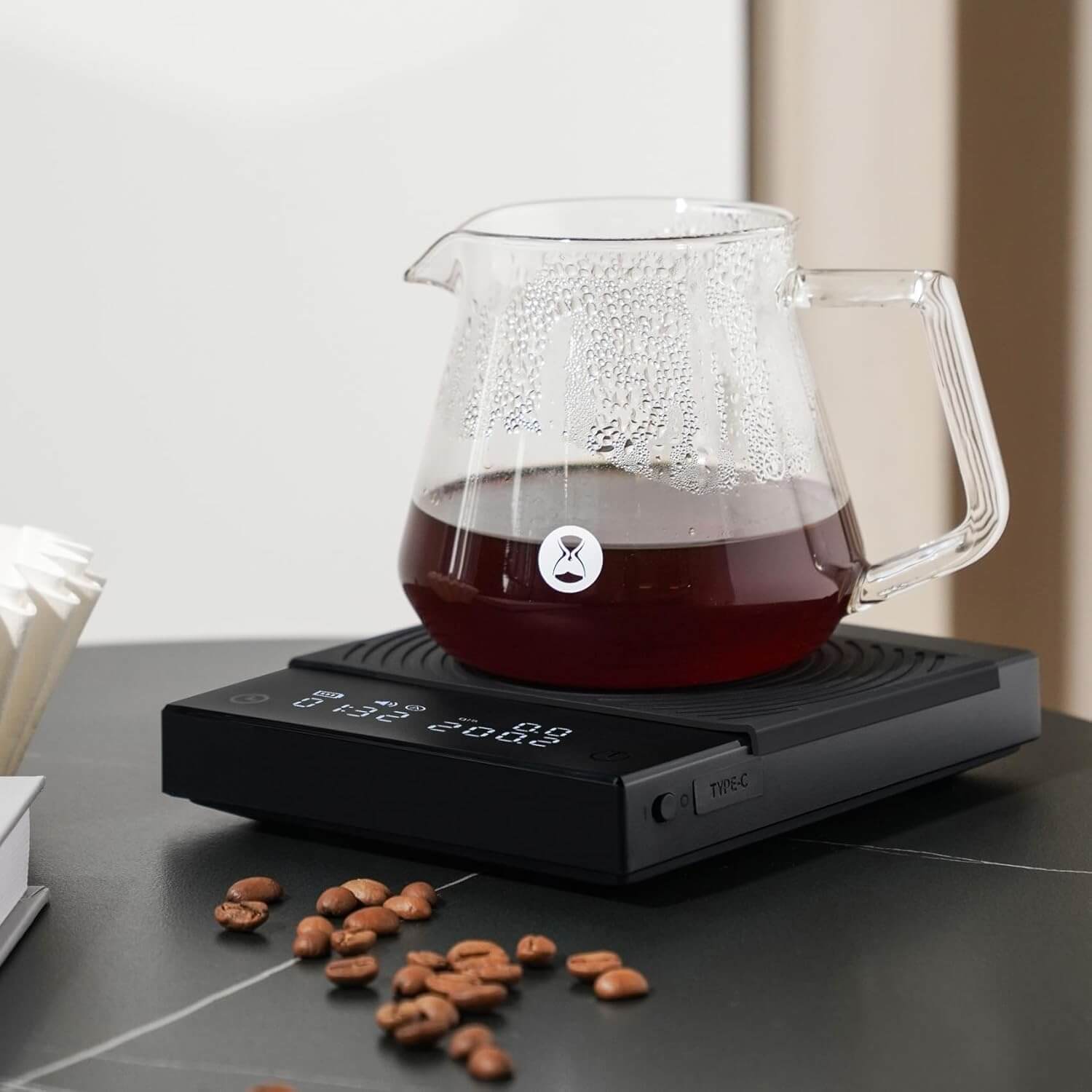
Timemore Black Mirror Scale
A compact scale with timer and 0.1g resolution that fits under most pour-over setups. Reliable for daily use.
The bottom line
The best coffee scale is usually the one that gets the basics right and keeps doing it. Look for 0.1 gram resolution, enough capacity for your actual brew setup, and durability you will not have to think about.
That is the whole idea. Buy once. Use it every day. Let the scale stay quiet while the coffee gets better.
A coffee scale does not need to be clever. It needs to be dependable. That is enough.