Why Your Coffee Tastes Bitter (And How to Fix It at Home)
Bitter coffee usually means over-extraction. Learn why it happens, how to fix it without new gear, and when bitterness is actually OK.
Bitter coffee is one of the most common problems people run into at home.
If your coffee tastes harsh, dry, or unpleasant, it usually means something went wrong during extraction — not that the coffee itself is bad.
The good news is that bitterness is almost always fixable.
In most cases, it comes down to grind size, water temperature, brew time, or agitation. Small changes make a big difference, and you don't need new gear to fix it.
This guide explains why coffee tastes bitter, how to tell what's causing it, and what to adjust so your next cup tastes better.
TL;DR: Bitter coffee usually means extraction was too high. Make your grind a bit coarser, lower water temp, shorten brew time, and agitate less.
Why bitterness happens
Coffee has sweet, acidic, and bitter compounds. Extraction pulls all of them out over time.
The early part of a brew gives you sweetness and acidity. The later part gives you bitterness and astringency. If you extract too long or too fast, you get too much of the bitter stuff.
That's why "over-extracted coffee" tastes harsh, dry, or burnt.
Common causes of bitter coffee
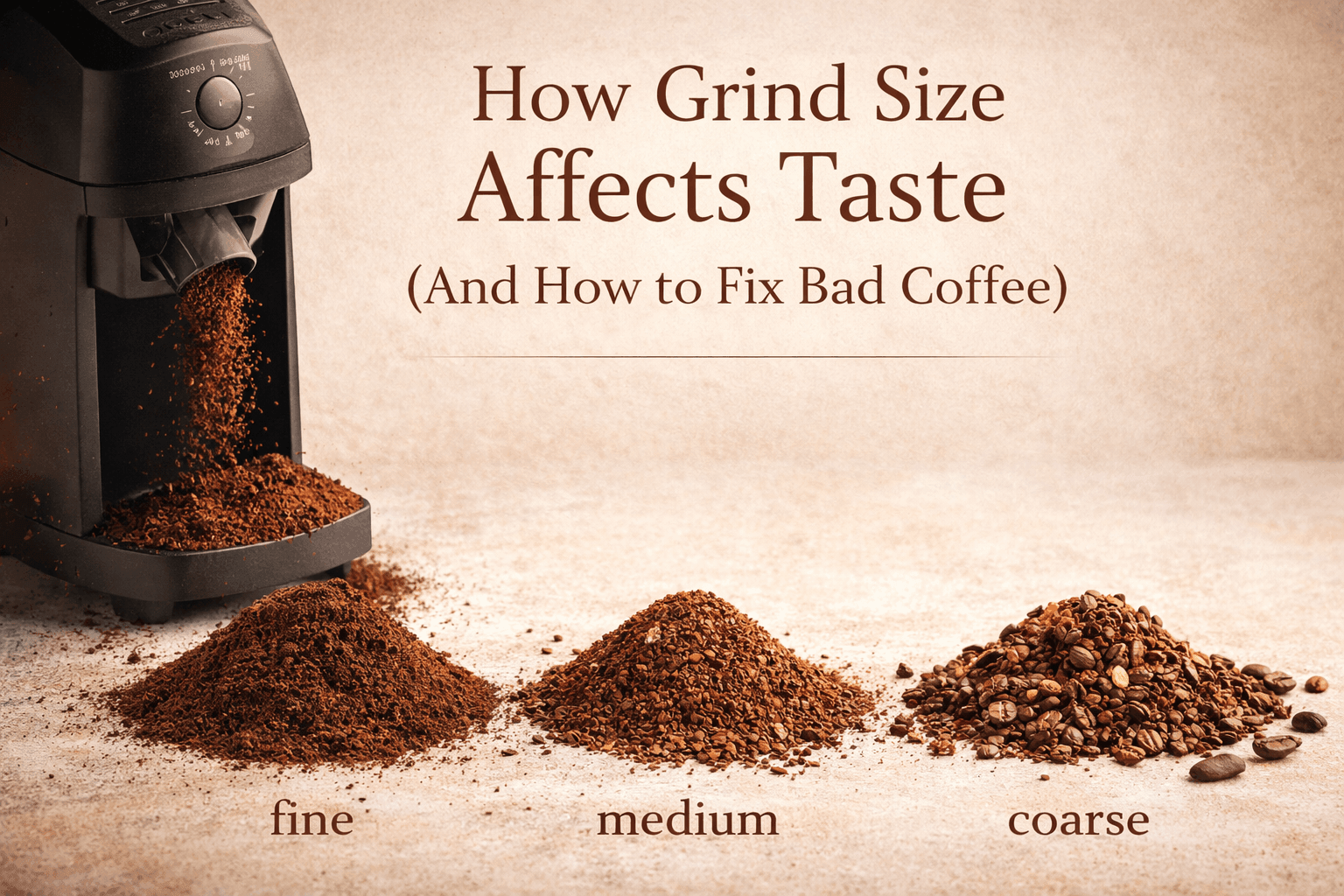
Grind too fine
Fine grounds extract faster. If your grind is too fine for your method, the water pulls out bitter compounds before you can stop it.
This is the #1 reason coffee tastes bitter at home. It's also the easiest fix.
If you want the deeper explanation, see our guide on how grind size affects taste.
Water too hot
Water that's too hot extracts faster and harsher. If you're using boiling water straight off the kettle, you'll pull more bitter compounds.
Try letting the kettle sit 30-60 seconds after boiling. You'll land closer to 90-96 C, which is the sweet spot for most coffee.
Brew time too long
Long contact time = more extraction = more bitterness.
This shows up in French press and AeroPress most often, especially if you're leaving it to steep "just a little longer." Those extra 30-60 seconds matter.
Too much agitation
Stirring, swirling, or aggressive pouring can make extraction harsher. It's not always bad, but too much can push a brew into bitterness.
If your coffee tastes bitter, try a gentler pour or skip the extra stir.
Ratio too strong
Using too much coffee for the amount of water can make a brew taste more bitter, even if extraction is fine. Stronger coffee highlights bitter notes.
Try a slightly lower dose before changing anything else.
Dark roast profile
Some bitterness is just roast flavor. Dark roasts naturally taste more bitter because the sugars in the bean have been caramelized longer.
If your beans are very dark, a little bitterness is expected. You can still improve balance, but you won't erase it entirely.
How to fix bitter coffee (no new gear)
1. Make the grind a bit coarser
Move your grinder 2-3 clicks coarser. If you're using pre-ground, ask for a slightly coarser grind.
Brew again with the same method and ratio. Most of the bitterness should drop immediately.
2. Lower your water temperature
If you don't have a thermometer, just wait after boiling.
- Light roasts: 30-45 seconds off boil
- Medium/dark roasts: 60-90 seconds off boil
Cooler water slows extraction and removes harshness.
3. Shorten your brew time
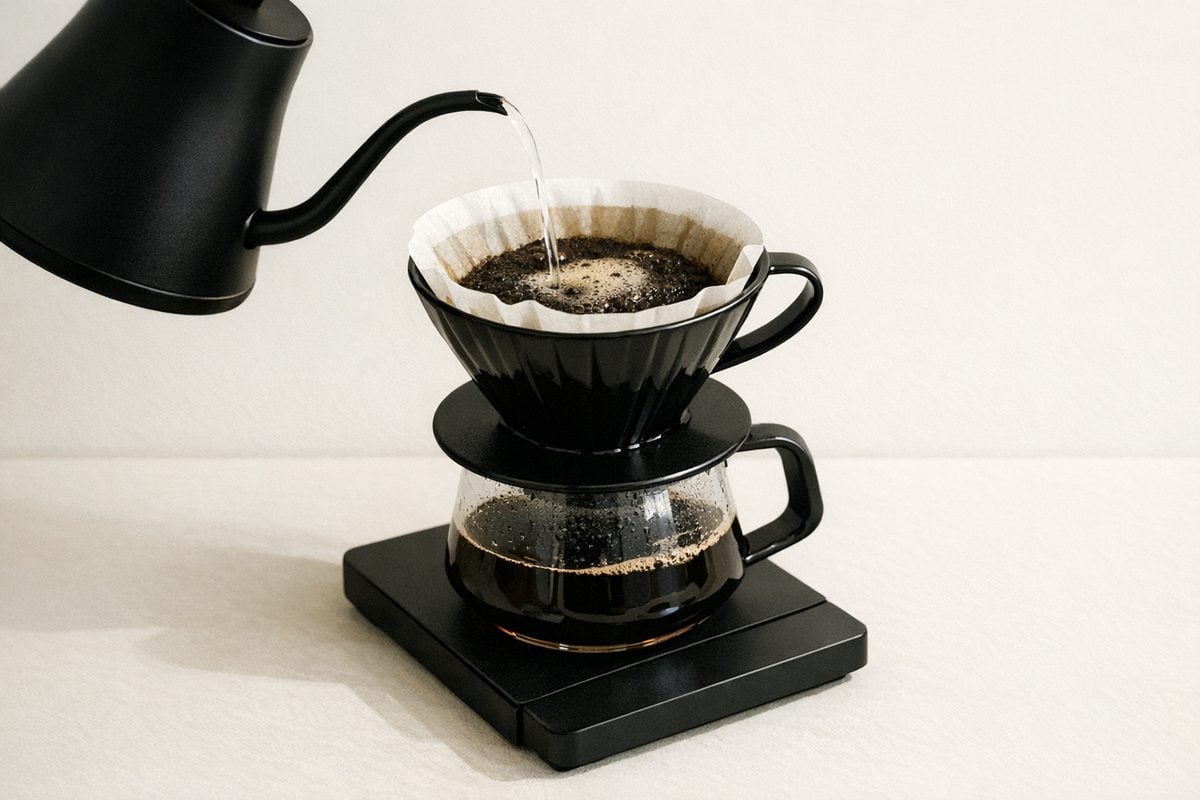
Reduce steep time by 30-60 seconds, or pour a bit faster if you're doing pour-over.
If you're using a timer, start there. If you're not, start timing. It's the fastest way to get consistent.
4. Reduce agitation
Don't stir aggressively. Don't swirl for the sake of it. Pour with a steady, gentle stream.
Less movement = less aggressive extraction.
5. Slightly reduce dose
If your ratio is heavy (like 1:14), try 1:15 or 1:16.
You'll get a cleaner cup with less bitterness.
Method-specific fixes
French press
Bitter French press usually means too fine or too long.
- Go coarser
- Steep 4 minutes (not 6-8)
- Break the crust gently and press slowly
If you want the full walkthrough, see our French press guide.
V60
Bitter V60 usually means too fine or too hot.
- Go slightly coarser
- Use cooler water
- Reduce agitation (gentler pour, fewer swirls)
This is also covered in our V60 basics.
AeroPress
Bitter AeroPress usually means too long or too hot.
- Shorten steep time
- Use cooler water
- Press gently
If you're doing inverted, don't let it sit too long.
When bitterness is actually OK
Not all bitterness is bad.
- Dark roasts are naturally more bitter
- Espresso is concentrated and often slightly bitter
- Milk drinks often benefit from a bit of bitterness
The goal isn't "no bitterness." The goal is balanced coffee.
If your cup still has some bitterness but also sweetness and body, you're likely in the right place.
Quick troubleshooting checklist
If your coffee tastes bitter, try this order:
- Grind coarser
- Lower water temp
- Shorten brew time
- Reduce agitation
- Lower your dose
Make one change at a time, taste, and adjust.
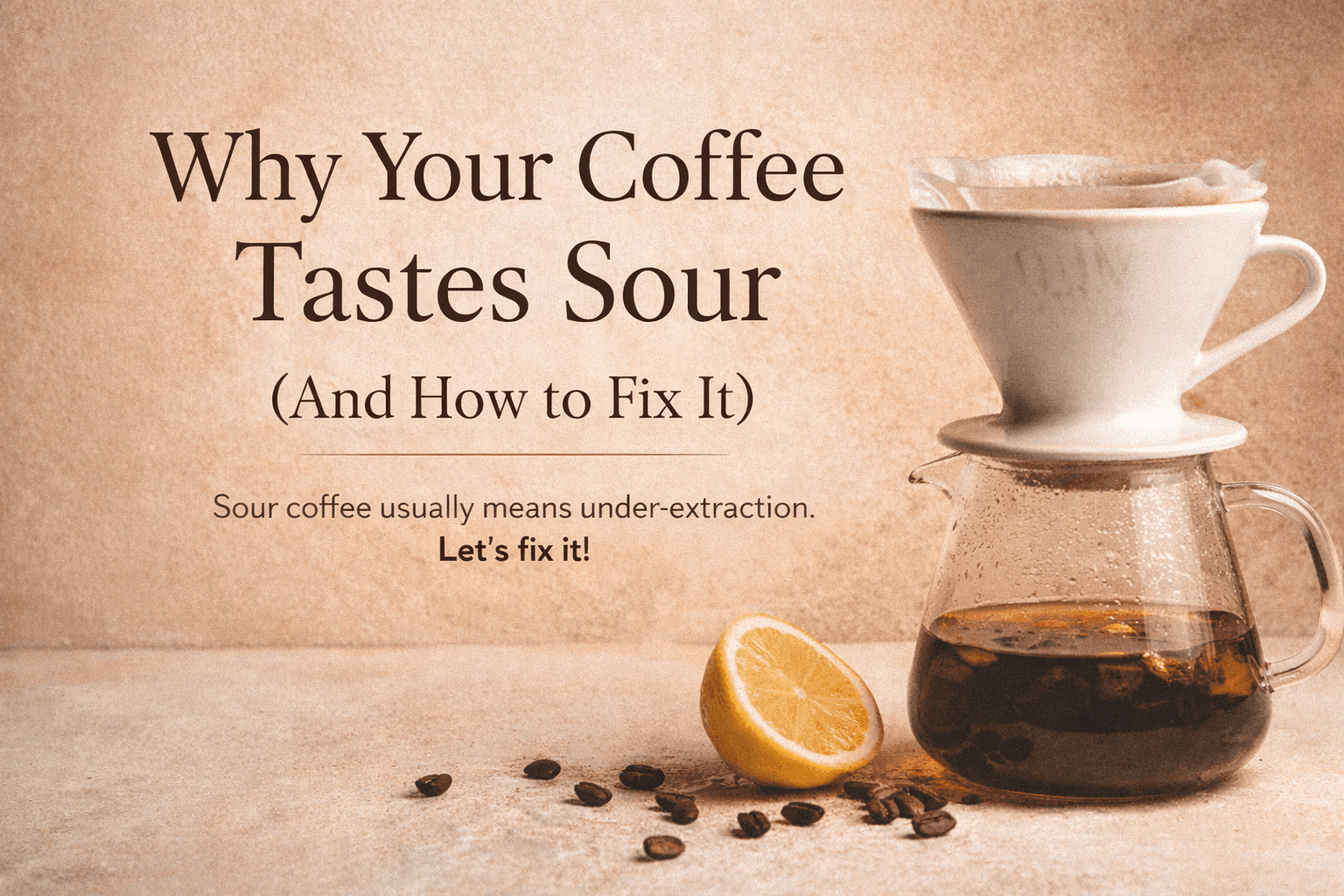
If your coffee tastes sour instead, that's the opposite problem — under-extraction.
Bottom line
If your coffee tastes bitter, it's usually over-extracted.
That's a fixable problem.
Start with grind size, then adjust temperature, time, and agitation. You don't need new gear — just small changes.
If you want to go deeper, read how grind size affects taste. It's still the fastest way to fix bad coffee.