How Coffee Brewing Methods Actually Differ (Taste, Body, Clarity)
Coffee isn't just beans and water. The way water meets coffee changes everything. Here's how brewing methods actually differ in taste, body, and clarity—and how to choose the right one for how you drink coffee.
The same coffee beans will taste different depending on how you brew them.
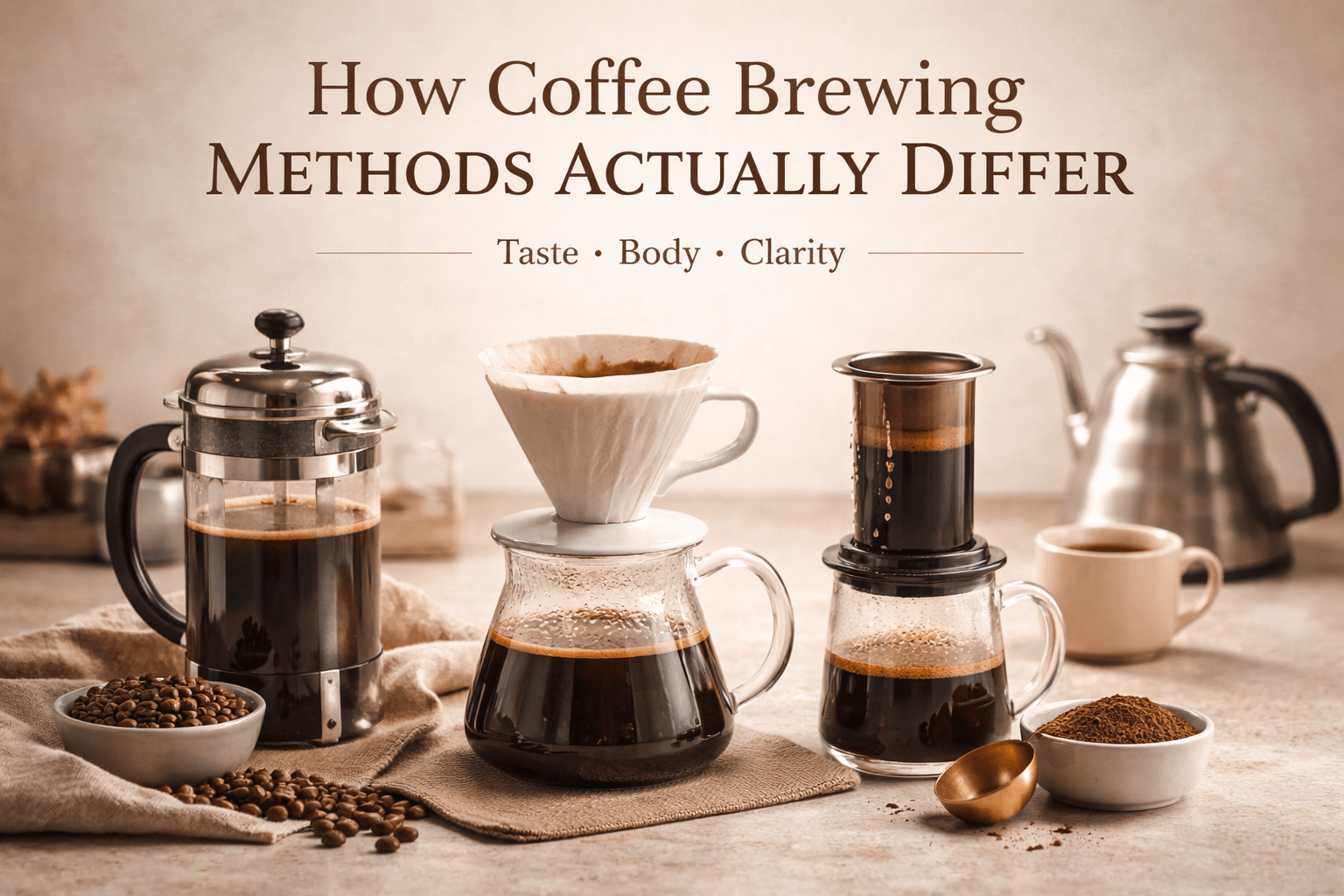
A V60 cup tastes clean and bright. A French press cup tastes heavy and rich. An AeroPress cup sits somewhere in between.
This isn't marketing. It's physics.
Water temperature, contact time, and filtration method change what ends up in your cup. Understanding these differences helps you choose the right method for how you actually drink coffee.
Why brewing method matters
Brewing method determines what extracts from your coffee and what gets filtered out. This changes the final cup more than most people realize.
Immersion vs percolation (in plain English)
There are two main ways coffee and water interact:
Immersion: Coffee and water sit together. Like tea.
Percolation: Water flows through coffee. Like a filter.
Immersion methods
French press, AeroPress, and cold brew are immersion methods.
Coffee grounds steep in water. Everything extracts together. Then you separate the liquid from the grounds.
What this means: More oils and fine particles make it into your cup. The result is heavier body, more texture, and sometimes what people call "muddiness."
Percolation methods
V60, Chemex, and automatic drip are percolation methods.
Water flows through coffee grounds once. The filter catches most oils and fine particles.
What this means: Less body, more clarity. You taste the coffee's flavor notes more clearly, but you lose some of that rich, heavy mouthfeel.
Why this matters
Immersion methods extract more evenly. Everything gets the same amount of time.
Percolation methods extract in stages. The first water that hits the coffee extracts differently than the last water.
Neither is better. They're just different.
Clarity vs body
This is the biggest difference between methods.
Clarity means you can taste distinct flavor notes. The coffee tastes "clean."
Body means the coffee feels thick and rich in your mouth. It has weight.
Most methods lean one way or the other.
Why V60 tastes clean
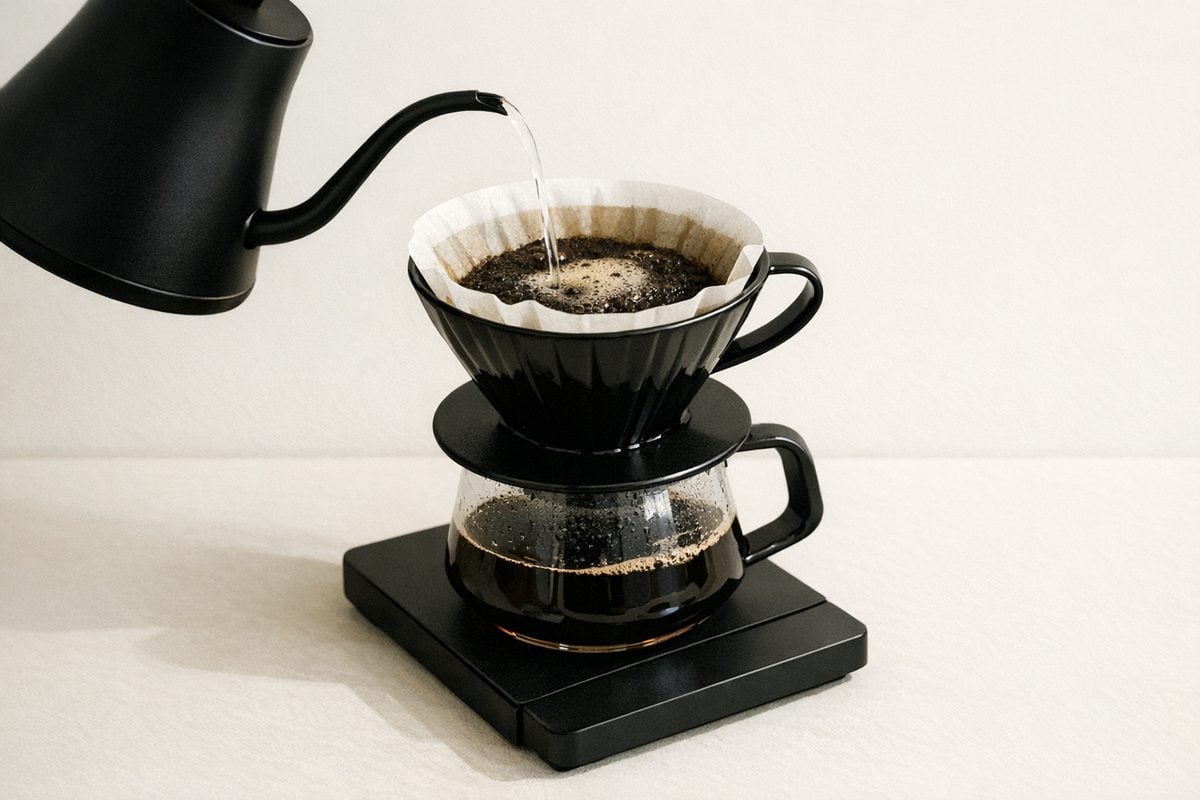
The V60 uses a paper filter and percolation. The filter catches oils and fine particles. Water flows through once, extracting flavor compounds but leaving behind the heavier elements.
Result: Bright, clear flavors. You taste the coffee's origin characteristics. But you lose some richness.
If you want to taste the difference between a Kenyan and an Ethiopian, use a V60. The clarity makes the differences obvious.
Why French press feels heavy
The French press uses a metal filter and immersion. The metal filter lets oils and fine particles through. Everything extracts together for several minutes.
Result: Rich, full-bodied coffee. It feels substantial in your mouth. But the heavy body can mask subtle flavor notes.
If you want coffee that feels like a meal, use a French press. The body is unmatched.
Why AeroPress sits in between
The AeroPress uses a paper filter but immersion brewing. You get the even extraction of immersion, but the paper filter removes some oils and particles.
Result: More body than a V60, more clarity than a French press. It's a middle ground.
The AeroPress is flexible. You can push it toward clarity or body by adjusting your method. But by default, it balances both.
Control vs forgiveness
Some methods punish mistakes. Others don't.
High control, low forgiveness
V60 requires attention. Pour speed, water distribution, and timing all matter. Get it wrong, and your coffee tastes sour or bitter. Get it right, and it's excellent.
Chemex is similar but more forgiving than a V60. The thicker filter and slower flow give you more margin for error.
Medium control, medium forgiveness
AeroPress is forgiving but still lets you control variables. You can adjust steep time, grind size, and pressure. Mistakes are noticeable but not catastrophic.
Low control, high forgiveness
French press is hard to mess up. Add coffee, add water, wait, press. The immersion method is forgiving. You'll get decent coffee even if your technique isn't perfect.
Automatic drip is the most forgiving. Set it and forget it. But you give up control.
Why this matters
If you're learning, start with a forgiving method. You'll make good coffee while you figure out grind size and ratios.
If you want to experiment, use a method with more control. You can fine-tune every variable.
If you're in a rush, use something forgiving. You don't want to think about pour technique at 6 AM.
Choosing a method based on how you drink coffee
The best brewing method is the one that fits how you actually drink coffee.
Morning rush
You need coffee fast. You're not thinking clearly. You want something simple.
Best options: AeroPress or automatic drip.
The AeroPress is fast—two minutes from start to finish. It's also forgiving. You can make it work even when you're half-awake.
Automatic drip is even simpler. Set it up the night before, wake up to coffee.
Avoid: V60. It requires too much attention for early mornings.
Slow weekend
You have time. You want to enjoy the process. You might make multiple cups.
Best options: V60 or French press.
The V60 rewards attention. You can experiment with different techniques. The process is meditative.
The French press makes multiple cups easily. It's simple but satisfying. You can make a full pot and enjoy it slowly.
Avoid: Nothing, really. This is when any method works.
Travel
You're making coffee in a hotel room, at a campsite, or in an office.
Best options: AeroPress or portable pour-over.
The AeroPress is compact and durable. It works anywhere you have hot water. Cleanup is easy.
Portable pour-overs like the V60 are also good. They pack small and work with any cup.
Avoid: French press. It's too fragile and bulky for travel.
Multiple people
You're making coffee for a group. You need volume.
Best options: French press or automatic drip.
The French press makes 4–8 cups easily. It's simple to scale up.
Automatic drip is built for this. Make a full pot, keep it warm.
Avoid: AeroPress and V60. They're built for one cup at a time. Making multiple cups is tedious.
Where each method shines
V60: When you want clarity
The V60 produces the cleanest, brightest coffee. Use it when:
- You want to taste origin characteristics
- You're comparing different coffees
- You enjoy the brewing process
- You have time to pay attention
The V60 rewards practice. The more you use it, the better your coffee gets.
For a complete guide, see our V60 Basics article.
French press: When you want body
The French press produces the richest, heaviest coffee. Use it when:
- You want a substantial, full-bodied cup
- You're making coffee for multiple people
- You want something simple and forgiving
- You don't mind some sediment
The French press is hard to mess up. It's reliable and consistent.
For a complete guide, see our Best French Press Guide 2025 article.
AeroPress: When you want flexibility
The AeroPress balances clarity and body. Use it when:
- You want good coffee quickly
- You're traveling or have limited space
- You want something forgiving but still controllable
- You make coffee for one person
The AeroPress is versatile. You can push it toward clarity or body depending on your method.
For a complete guide, see our AeroPress Guide 2026 article.
Chemex: When you want the cleanest cup
The Chemex uses a thicker filter than the V60, producing an even cleaner cup. Use it when:
- You want maximum clarity
- You're making coffee for 2–4 people
- You want something beautiful on your counter
- You don't mind the extra cleanup
The Chemex is less forgiving than a V60, but it produces a uniquely clean cup.
Automatic drip: When you want convenience
Automatic drip machines are the most convenient. Use them when:
- You make coffee for multiple people regularly
- You want to set it and forget it
- You're not interested in the brewing process
- You want consistent results with minimal effort
Good automatic drip machines make good coffee. They're not as flexible as manual methods, but they're reliable.
The bottom line
Brewing methods aren't about complexity or price. They're about what ends up in your cup.
Want clarity? Use a V60 or Chemex.
Want body? Use a French press.
Want balance? Use an AeroPress.
Want convenience? Use an automatic drip.
The best method is the one that fits how you actually drink coffee. Not how you think you should drink coffee.
Start with one method. Master it. Then try others. You'll understand the differences better once you've experienced them.
Coffee brewing isn't complicated. But understanding how methods differ helps you choose the right tool for the job.
Frequently Asked Questions
Can I make the same coffee taste the same with different methods?
No. The method changes what extracts and what gets filtered out. A French press will always have more body than a V60, even with the same beans and ratios.
Which method is best for beginners?
French press or AeroPress. Both are forgiving and produce good coffee with minimal technique. The V60 requires more practice.
Do I need expensive equipment?
No. A good French press costs $30. A V60 costs $20. An AeroPress costs $35. The equipment is cheap. The coffee and technique matter more.
Can I use the same grind size for all methods?
No. French press needs coarse grounds. V60 needs medium-fine. AeroPress needs medium-fine to fine. Grind size matters more than most people think.
Which method makes the strongest coffee?
Strength is about ratio, not method. Use more coffee or less water for stronger coffee, regardless of method. But different methods produce different body and clarity, which can make coffee feel stronger or weaker.