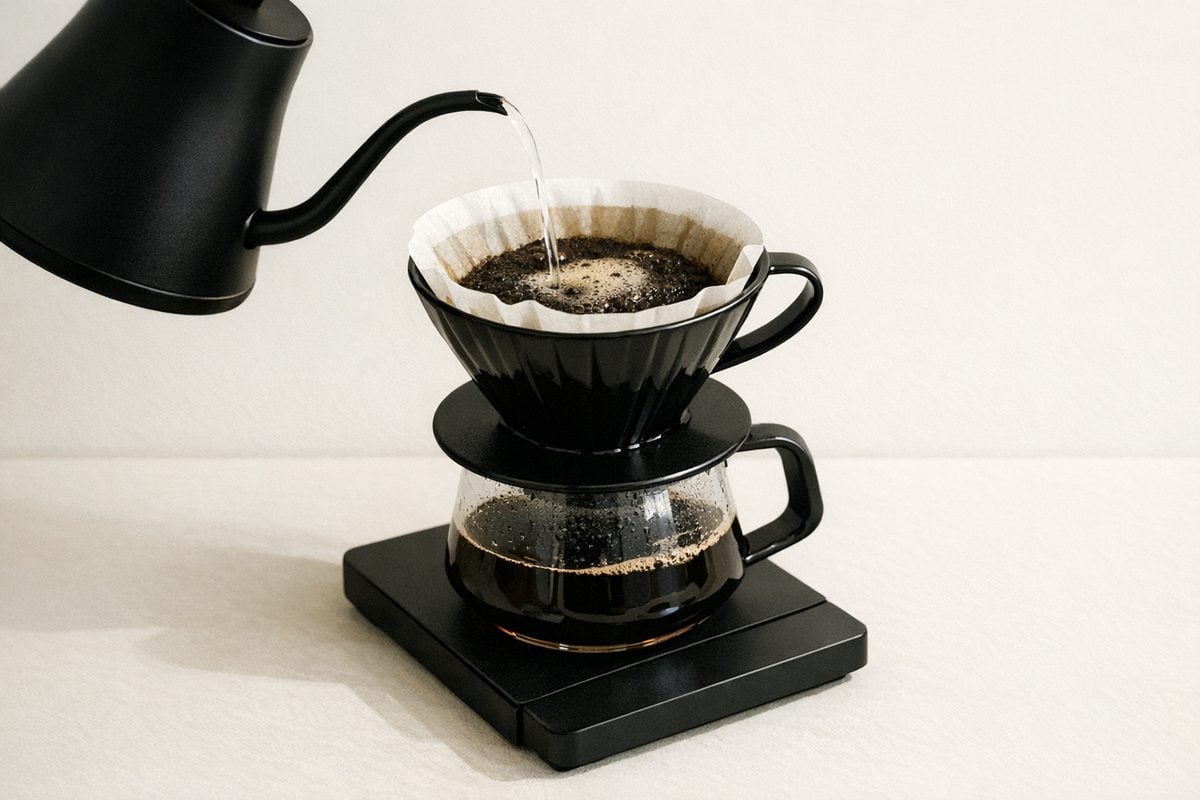
Batch Brew for the Week
A practical approach to making a larger batch of filter coffee that holds up.
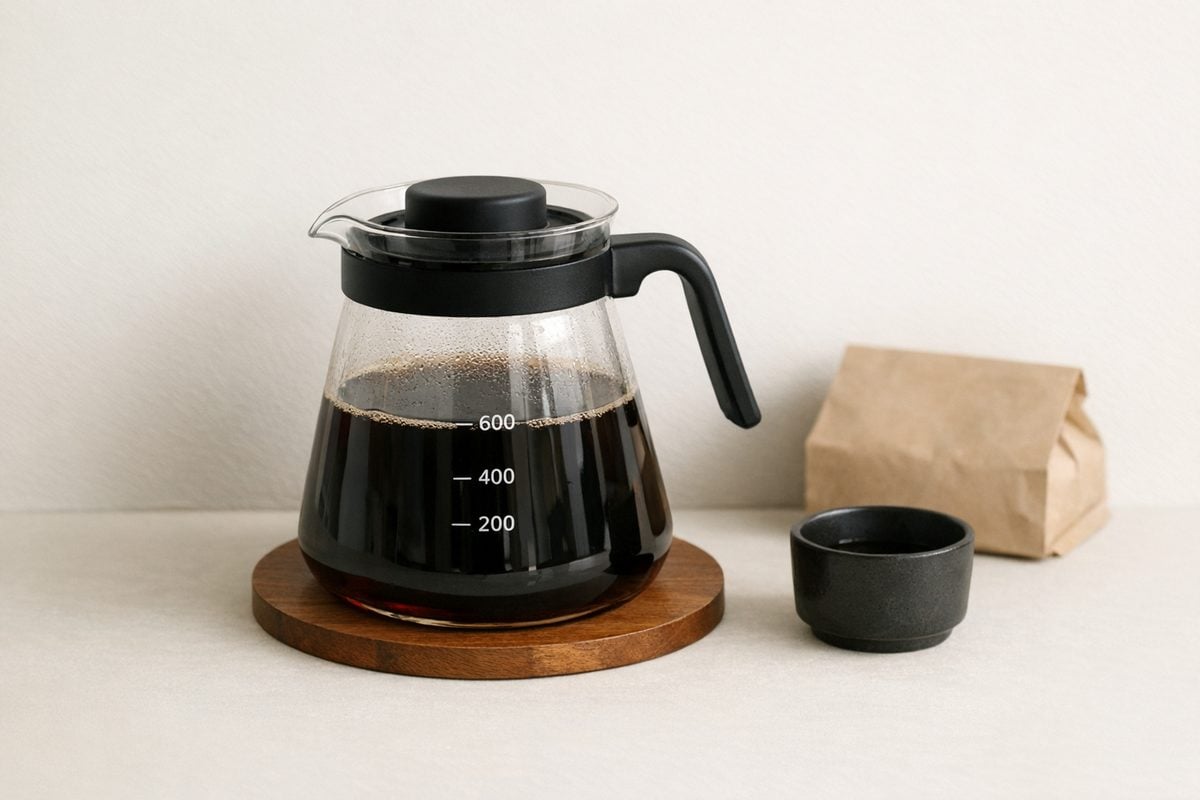
Batch brew coffee is a practical way to make more coffee at once without giving up the clean, balanced character of filter brewing. If the goal is to make coffee for the week, the method matters as much as the storage.
The short version is simple. Brew a larger batch with restraint, cool it quickly, store it well, and reheat only what you need.
What it is
Batch brew coffee means making a larger volume of filter coffee in one session instead of brewing cup by cup. That can mean a full drip machine batch, a larger manual brewer, or a concentrated filter brew that gets diluted later.
For this purpose, the most useful version is straightforward large batch filter coffee. Not cold brew batch. Not espresso kept in the fridge. Just regular filter coffee, brewed cleanly and stored with care.
This works because filter coffee holds up reasonably well for a few days if oxygen, heat, and light are controlled. It does not stay identical to a fresh cup. But it can stay good enough to be worth the effort.
The practical approach
If the goal is weekly convenience, brew enough for two to four days, not seven. Coffee quality drops over time, even in good storage. A full week is possible, but the last cups will usually taste flatter and less aromatic.
A solid approach looks like this:
- Brew a slightly stronger-than-normal batch of filter coffee.
- Cool it soon after brewing.
- Transfer it to a sealed glass bottle or carafe.
- Refrigerate it immediately.
- Reheat single servings gently when needed, or drink it cold.
Brewing slightly stronger helps because reheated coffee can taste muted. A small strength bump keeps it from feeling thin later. The key word is slightly. Too much strength makes the coffee harsh as it sits.
How to brew it so it still tastes good
Large-volume coffee tends to expose small mistakes. If the brew is uneven, weak, or over-extracted, storage will not fix it. It will make the problem more obvious.
A few principles help:
Keep the recipe simple
Use the same coffee-to-water ratio you trust for filter, then adjust one step stronger if needed. There is no need to reinvent the method just because the volume is bigger.
If your normal filter ratio is around 1:16 or 1:17, moving closer to 1:15.5 or 1:15 can make sense for stored coffee. Not always. But often.
Grind for clarity, not intensity
A grind that is too fine can make large batches taste heavy and bitter, especially after refrigeration. A slightly coarser grind usually gives a cleaner result and better stability.
Use good water and fully saturate the bed
In larger brews, channeling and dry pockets become more likely. Make sure the grounds are evenly wet early on. If you are brewing manually, pour with control. If you are using a machine, make sure the spray pattern is doing its job.
Do not leave it on a hot plate
This is one of the fastest ways to ruin batch brew coffee. Continued heat strips aroma and pushes stale flavors forward. Once brewed, move toward cooling and storage.
Storage matters more than most people think
If the brewing method is half the equation, storage is the other half.
The goal is to reduce oxygen exposure and avoid unnecessary heat. A sealed glass container is usually the best choice. Fill it as high as practical so there is less air in the container. Then refrigerate it promptly.
A few useful rules:
- Store in clean glass, not an open serving carafe.
- Seal it tightly.
- Cool before long storage, but do not leave it out for hours.
- Keep it away from foods with strong odors.
- Pour only what you need, then return the rest to the fridge.
If you want to make coffee for the week, splitting the batch into smaller bottles can help. Opening one small bottle at a time means the rest stays less exposed to air.
How long it keeps
For flavor, two to four days is the realistic sweet spot. Beyond that, the coffee usually loses brightness and structure. It can still be drinkable on day five or six, but expectations should be adjusted.
This is the tradeoff. You gain convenience. You lose some aroma and freshness.
If the goal is excellent coffee every day, brew more often. If the goal is good coffee with less daily work, stored batch brew coffee makes sense.
Who it's for
This method suits people who want reliable coffee ready to go without switching entirely to cold coffee methods.
It works well if you:
- drink filter coffee regularly
- want faster mornings
- need more than one serving available at a time
- prefer a clean coffee profile over the heavier texture of cold brew
- are fine with very good coffee instead of freshly brewed perfection every single cup
It is also useful for shared households or work setups where multiple cups get poured over the day.
Who it’s not for
This is not the right approach if your priority is peak aroma and nuance in every cup. Fresh filter coffee still wins there.
It is also a poor fit if you only drink one cup occasionally. In that case, single-brew methods stay simpler and waste less coffee.
And if what you actually want is a low-acid, ready-to-drink cold coffee, cold brew batch may be the better match. It stores longer and is built for refrigeration. It just tastes different.
A practical pick
One piece of gear that fits this topic well:
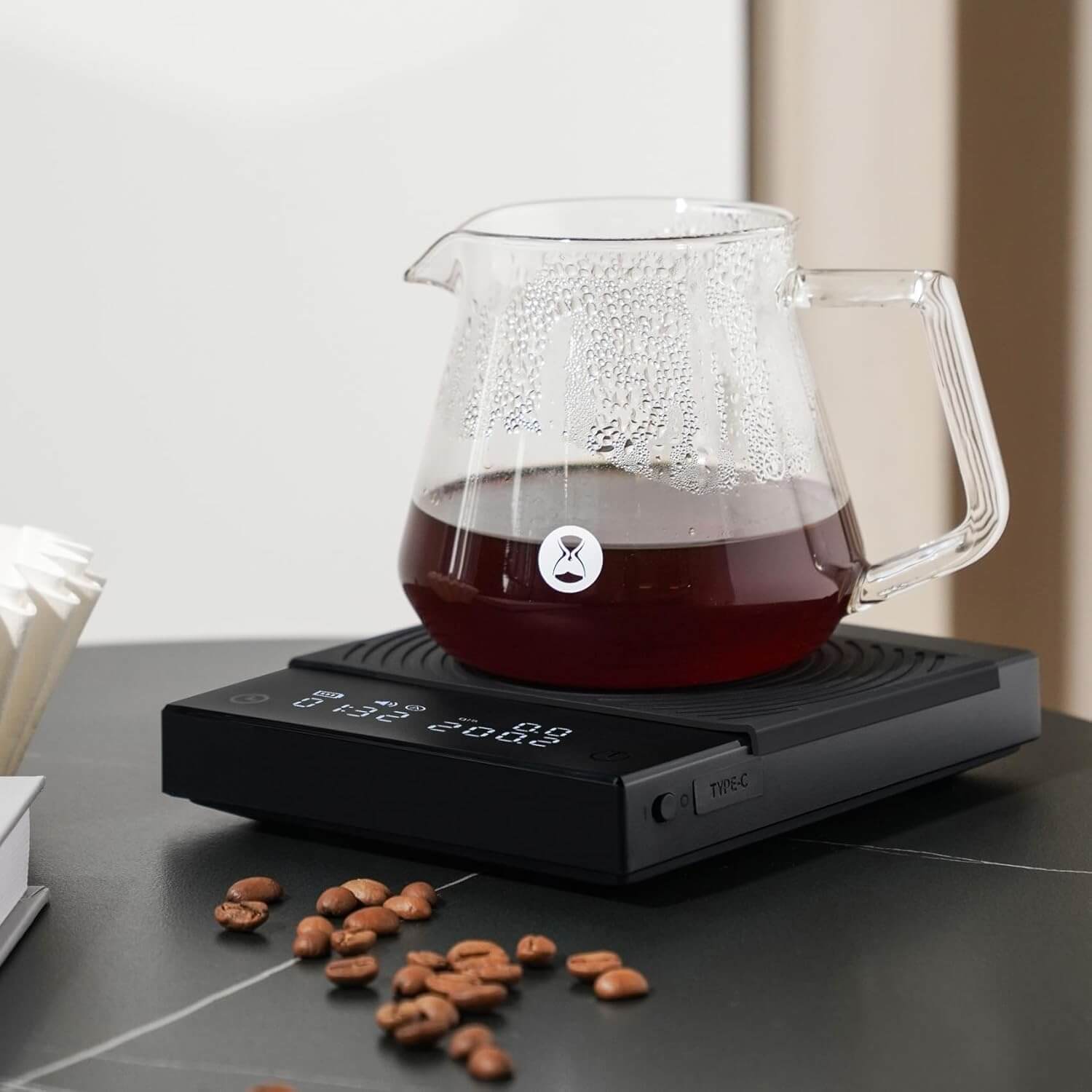
Timemore Black Mirror Scale
A compact scale with timer and 0.1g resolution that fits under most pour-over setups. Reliable for daily use.
Common mistakes
Brewing too much
Seven days of coffee sounds efficient. In practice, quality drops before the week is over. Smaller cycles usually work better.
Storing it warm
Warm coffee sealed too late loses freshness fast. Cool it and refrigerate it without stretching the timeline.
Reheating the whole container
Repeated heating damages flavor. Reheat one serving at a time.
Using poor storage containers
A loose-lid pitcher in the fridge is not enough. Coffee absorbs odors and oxidizes quickly.
Expecting it to taste freshly brewed
Stored coffee is a compromise. A useful one. But still a compromise.
The bottom line
Batch brew coffee makes sense when convenience matters, but you still want something recognizably like filter coffee. The best version is not a giant pot left sitting out. It is a well-brewed batch, cooled quickly, sealed tightly, and used within a few days.
If you want to make more coffee at once without defaulting to cold brew, this is the method worth using. Keep the batch moderate. Brew it cleanly. Store it well. That is usually enough.